
Case Study: Engineering Performance, Reliability, and Hydraulic Efficiency of Bathroom Fixtures
Technical Evaluation Based on ASME, ASSE, IPC, IAPMO, ASTM, and EPA WaterSense Engineering Frameworks
Scope: Mechanical Reliability, Flow Efficiency, Thermal Safety, and Fixture Lifecycle Performance
Bathroom fixtures represent terminal control points within potable water distribution systems, directly influencing hydraulic efficiency, user safety, microbial risk, and infrastructure durability. Engineering validation protocols from ASME, ASSE International, International Plumbing Code (IPC), and EPA WaterSense establish operational performance criteria governing flow regulation, pressure stability, temperature control, and valve durability. Fixture performance affects hydraulic energy losses, water conservation targets, and occupant safety outcomes. Improper fixture design or degraded valve assemblies increase failure probability, thermal instability, microbial growth risk, and long-term maintenance costs. This study evaluates twenty fixture categories based on mechanical engineering principles, hydraulic performance metrics, and validated plumbing engineering standards.
Sink (Lavatory)
Terminal Hydraulic Discharge Interface
Trap Seal Integrity and Fixture Drainage Performance
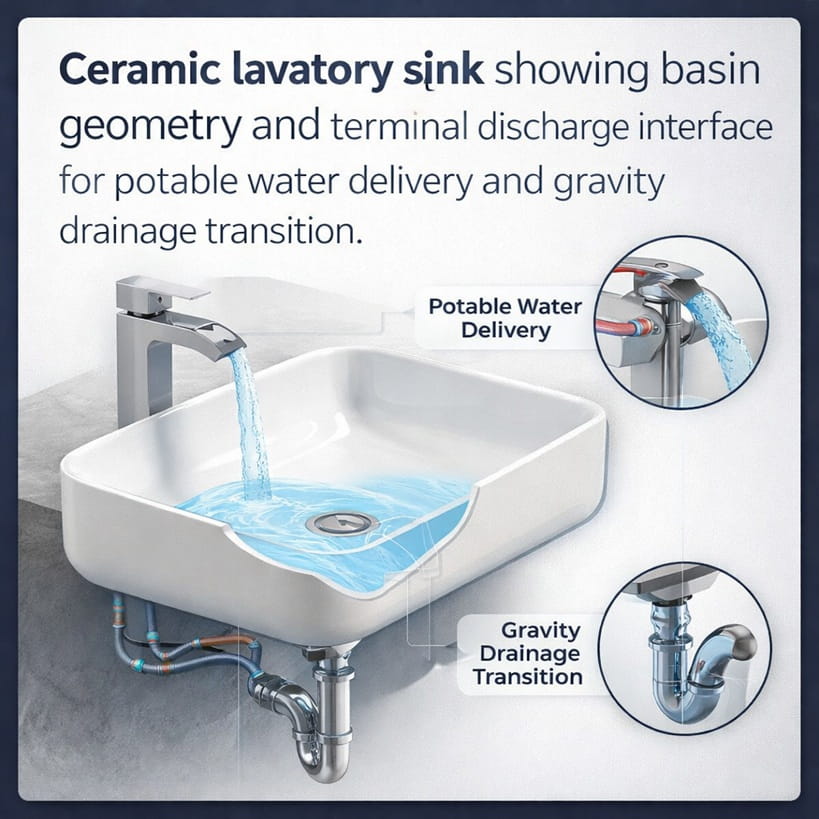
Lavatories function as primary discharge fixtures where hydraulic flow transitions from pressurized supply conditions into gravity-driven drainage systems. According to the International Plumbing Code (IPC 1002.4), trap seals must maintain a minimum depth of 2 inches to prevent sewer gas infiltration into occupied spaces. Fixture geometry, surface smoothness, and outlet diameter significantly influence discharge velocity, sediment accumulation risk, and long-term microbial colonization probability. Vitreous china materials demonstrate superior dimensional stability, low porosity, and chemical resistance compared to polymer-based basins. WaterSense-certified faucets delivering 1.5 GPM maintain adequate wash performance while reducing system demand and hydraulic energy losses. Proper lavatory engineering ensures optimal sanitation performance and hydraulic reliability across commercial and healthcare installations.
Toilet (Water Closet)
Siphonic Waste Evacuation System
Flush Energy Transfer and Trapway Hydraulics
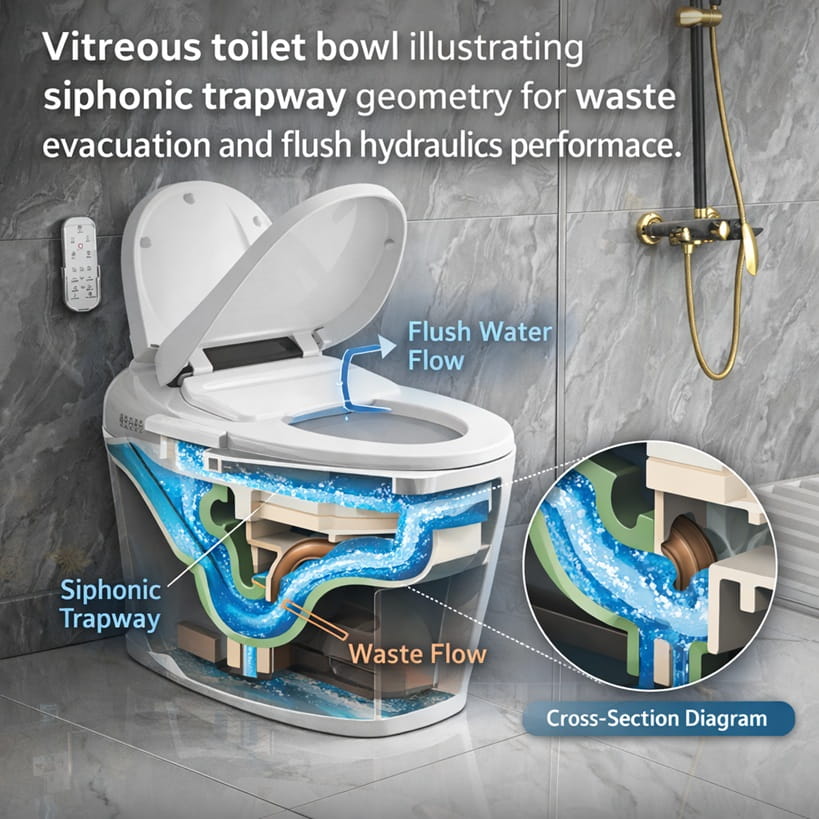
Water closets utilize siphonic evacuation driven by pressure differential and gravitational acceleration to remove waste efficiently. Engineering standards defined under ASME A112.19.2 regulate structural integrity, flush efficiency, and evacuation performance. Maximum Performance (MaP) testing demonstrates trapway diameter, glaze smoothness, and flush valve discharge velocity significantly influence solid waste transport efficiency and clog resistance. Pressure-assisted toilets improve discharge velocity and horizontal transport distance, reducing pipe deposition risks. Vitreous china construction ensures dimensional stability and structural reliability under repetitive mechanical stress exceeding 250,000 flush cycles. Optimized toilet engineering improves sanitation performance while minimizing water consumption and long-term maintenance requirements.
Faucet & Touchless Faucets
Sensor-Controlled Flow Regulation System
Solenoid Valve and Detection Stability Engineering
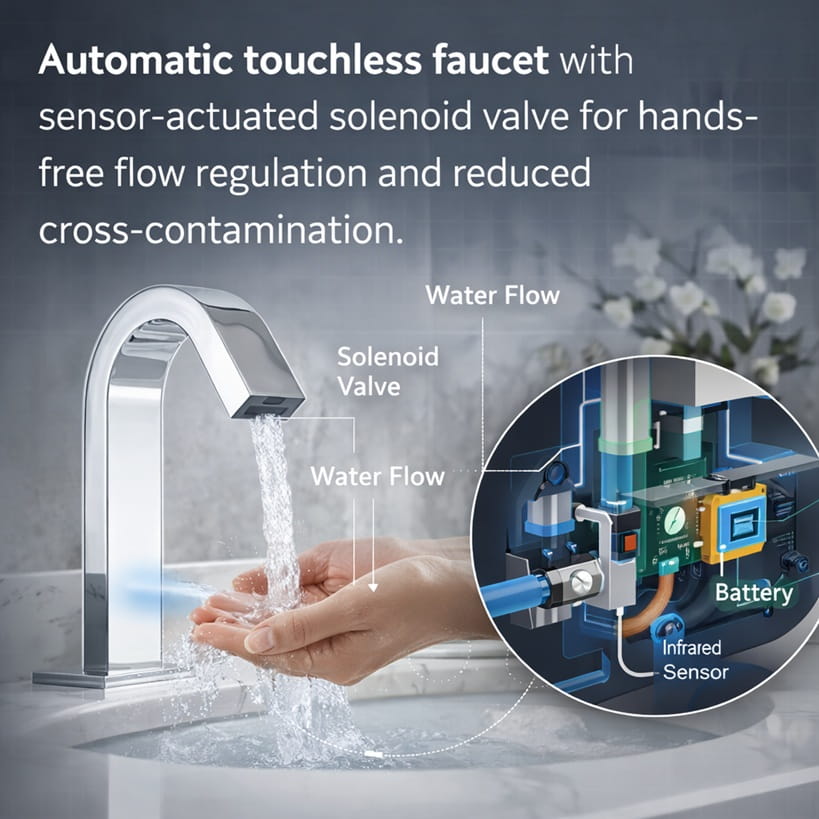
Touchless faucets integrate infrared or time-of-flight sensors with solenoid-actuated diaphragm valves controlling pressurized water discharge. ASSE 1070 standards regulate temperature stability and safe outlet delivery conditions. Solenoid valves constructed from corrosion-resistant brass and EPDM diaphragms demonstrate operational lifespans exceeding 500,000 actuation cycles. Sensor stability ensures activation accuracy and eliminates false triggering caused by ambient interference. WaterSense-certified faucets operating between 0.35 and 0.5 GPM significantly reduce water consumption while maintaining hygiene effectiveness. Reduced surface contact lowers microbial cross-contamination risk, making touchless faucets essential in healthcare and high-occupancy environments requiring enhanced infection control and operational reliability.
Shower & Luxury Showers
Thermostatic and Pressure-Balanced Flow Control
Multi-Outlet Hydraulic Distribution Engineering
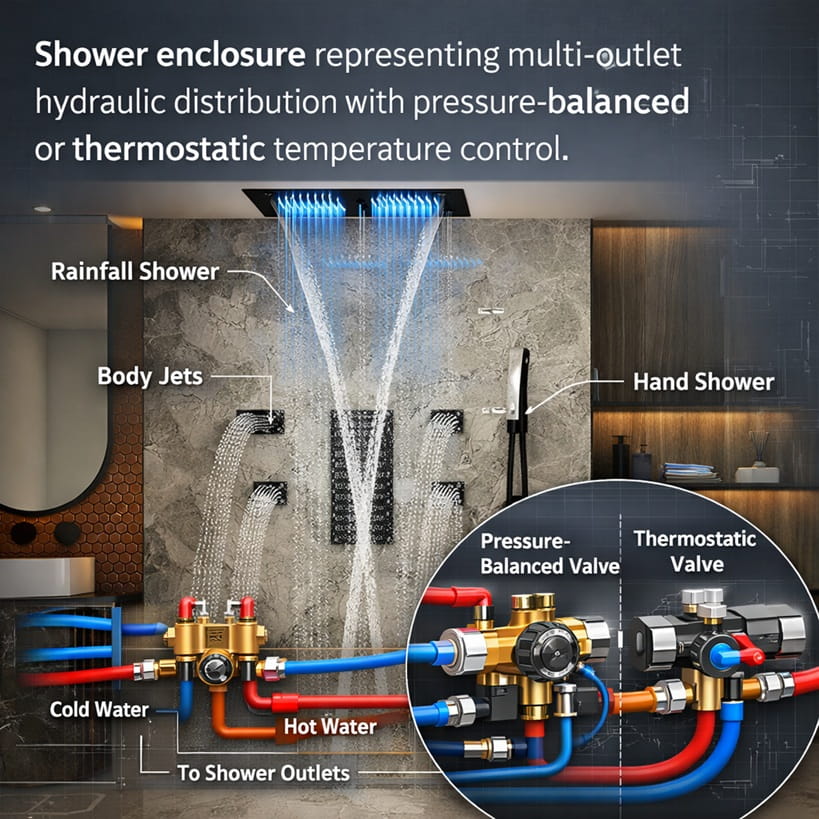
Shower systems incorporate pressure-balancing or thermostatic valves designed to maintain consistent outlet temperature despite supply pressure fluctuations. ASSE 1016 compliant valves regulate temperature variance within ±3°F, reducing scald risk. Multi-outlet shower systems integrate diverters managing distribution across rainfall heads, body sprays, and handheld outlets. Internal brass cartridges resist corrosion and maintain dimensional stability under thermal cycling. Engineering research from CIBSE confirms thermostatic control systems significantly improve occupant safety and reduce temperature instability in multi-story plumbing systems experiencing variable pressure conditions and hydraulic demand fluctuations.
Bathtub
Thermal Retention and Structural Load Performance
Material Engineering and Lifecycle Durability
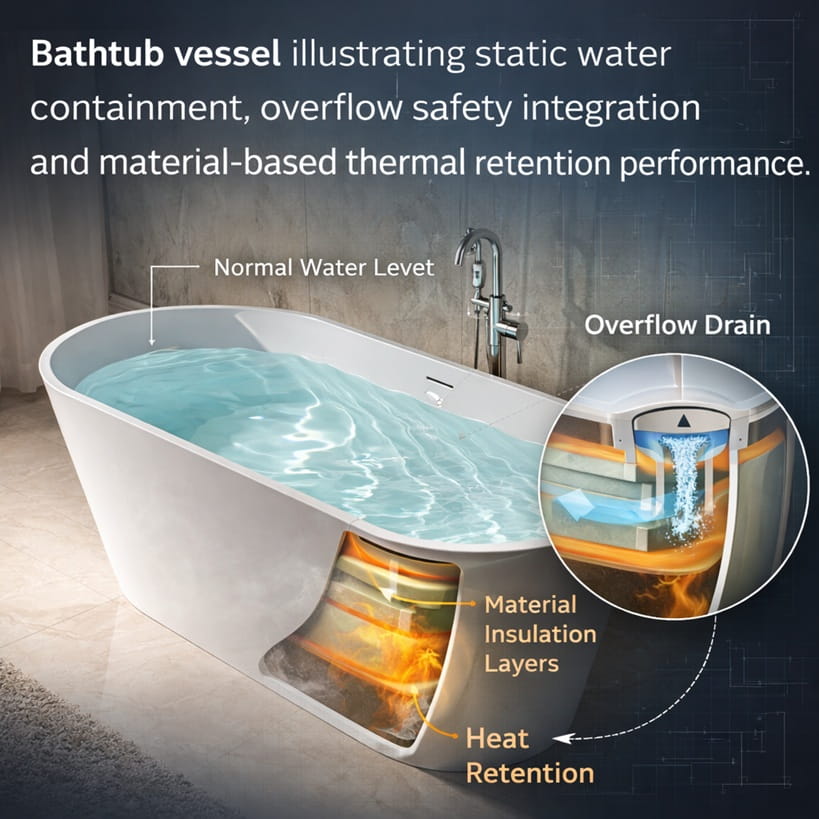
Bathtubs function as static hydraulic containment fixtures requiring structural strength, corrosion resistance, and thermal retention performance. Cast iron bathtubs coated with vitreous enamel exhibit superior heat retention due to high thermal mass and reduced heat transfer coefficients. ASTM material engineering standards confirm cast iron provides exceptional structural load tolerance and resistance to deformation under repeated occupant loading. Acrylic tubs offer lighter installation weight but demonstrate greater thermal loss and reduced long-term structural rigidity. Proper overflow integration ensures hydraulic safety and prevents unintended flooding events during prolonged filling cycles in residential and hospitality environments.
Bidet
Personal Hygiene Water Delivery Fixture
Controlled Directional Flow Engineering
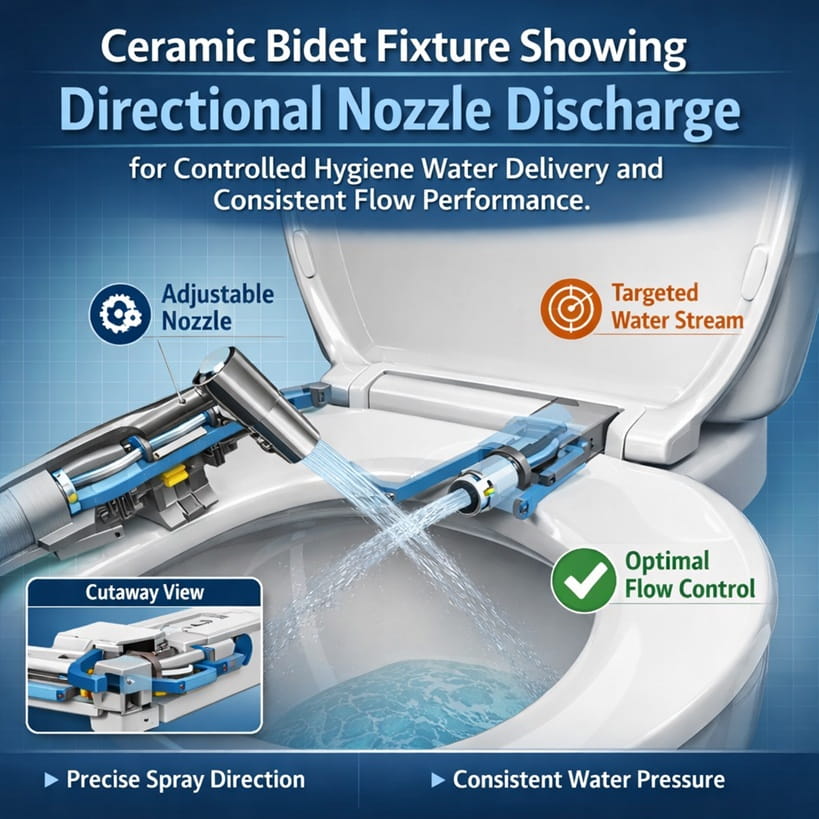
Bidets provide controlled directional water discharge designed to improve personal hygiene while reducing toilet paper consumption and system waste load. Engineering standards under ASME A112.4.2 regulate structural durability, flow rate consistency, and hydraulic safety. Proper nozzle alignment ensures efficient cleaning performance while minimizing splashing and hydraulic inefficiencies. Ceramic construction provides corrosion resistance, dimensional stability, and microbial resistance. Bidet integration improves sanitation efficiency and reduces environmental waste, supporting sustainability objectives in modern plumbing system design.
Urinal
High Frequency Sanitary Fixture
Flush Efficiency and Waste Transport Performance
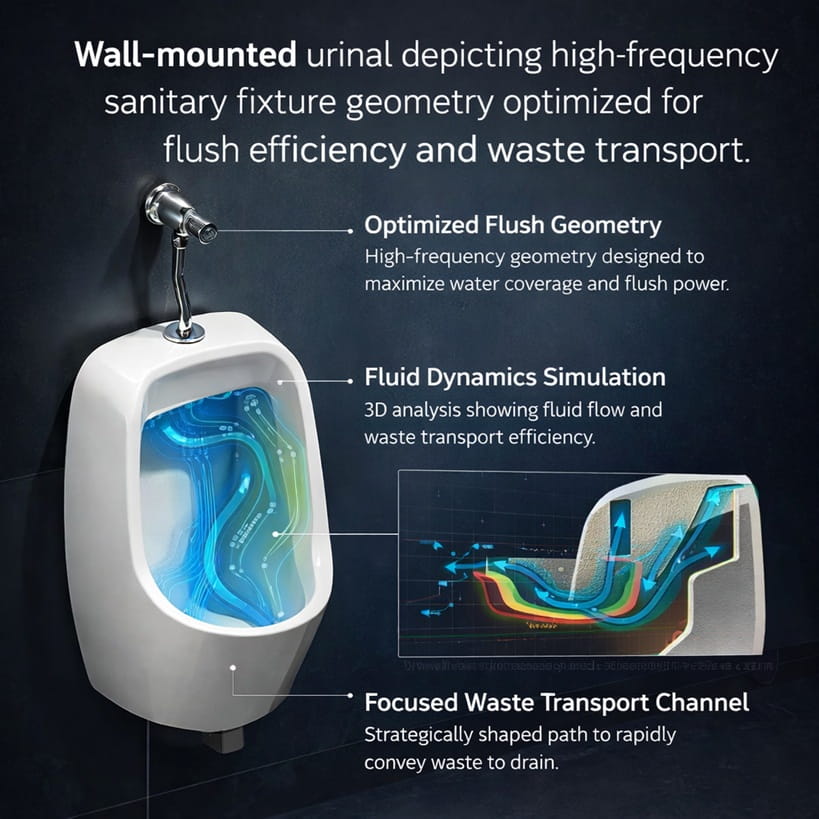
Urinals operate under frequent usage conditions requiring high reliability and efficient waste evacuation. WaterSense-certified urinals operating at 0.5 GPF reduce water consumption while maintaining sanitation effectiveness. Flush valve discharge velocity and bowl geometry significantly influence waste removal performance. Vitreous china construction ensures corrosion resistance and dimensional stability. High-frequency operation environments such as airports and stadiums require fixtures capable of sustaining millions of flush cycles without performance degradation.
Floor Drain
Emergency Hydraulic Discharge System
Trap Seal Protection and Drainage Reliability
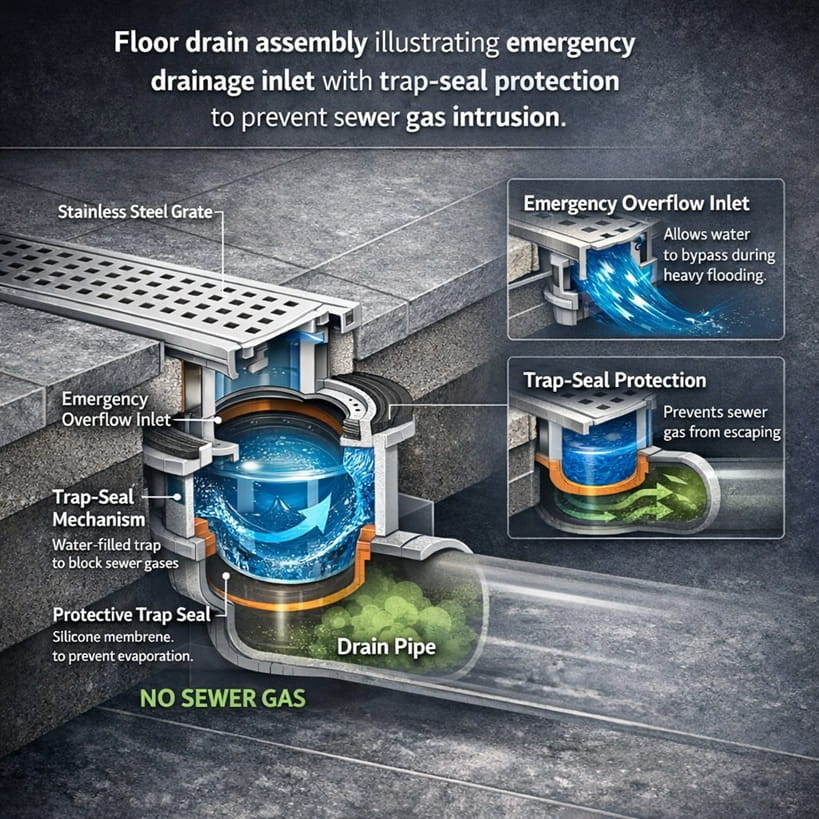
Floor drains provide emergency drainage pathways preventing structural flooding and water accumulation. IPC standards require trap seals preventing sewer gas intrusion. Stainless steel drain assemblies provide corrosion resistance and structural integrity under continuous moisture exposure. Proper slope and drain sizing ensure reliable discharge performance during overflow events and system failures.
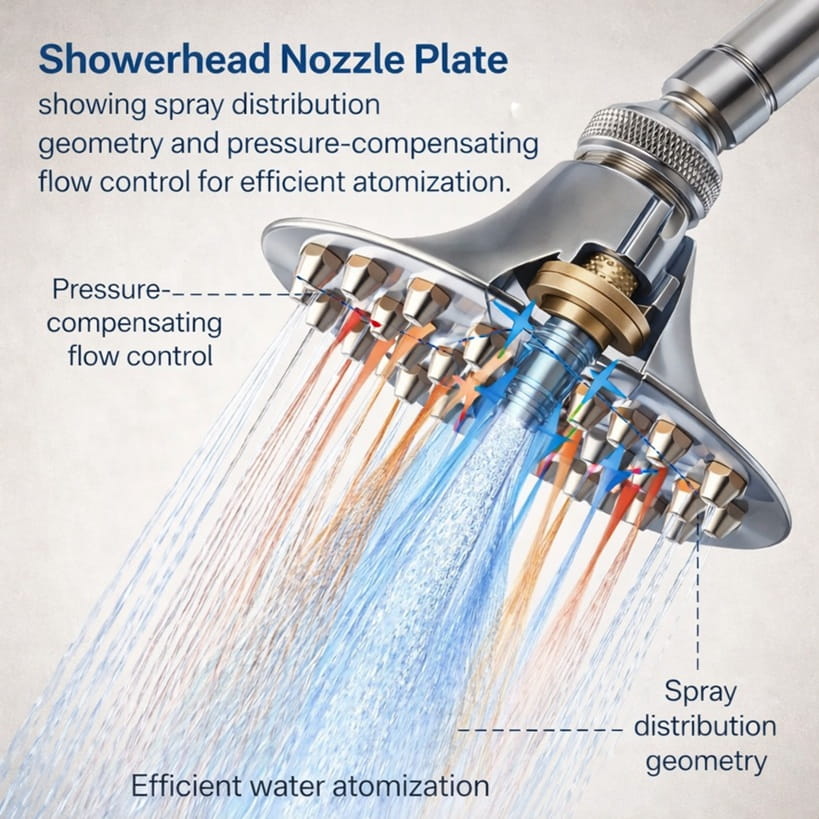
Showerhead
Terminal Spray Distribution Device
Nozzle Hydraulics and Flow Atomization Efficiency
Showerheads function as terminal spray discharge devices engineered to convert pressurized water into distributed spray patterns optimized for user comfort, coverage, and efficiency. WaterSense-certified showerheads limit flow rates to 2.0 GPM while maintaining effective spray force through engineered nozzle geometry and internal flow compensators. Elastomeric nozzle materials reduce mineral scaling and maintain consistent discharge patterns over time. Internal pressure-compensating regulators stabilize flow under varying supply pressures, ensuring hydraulic consistency. Engineering validation confirms optimized spray atomization improves cleaning efficiency while reducing water consumption and hydraulic system demand, supporting sustainability objectives and operational efficiency in both residential and commercial plumbing installations.
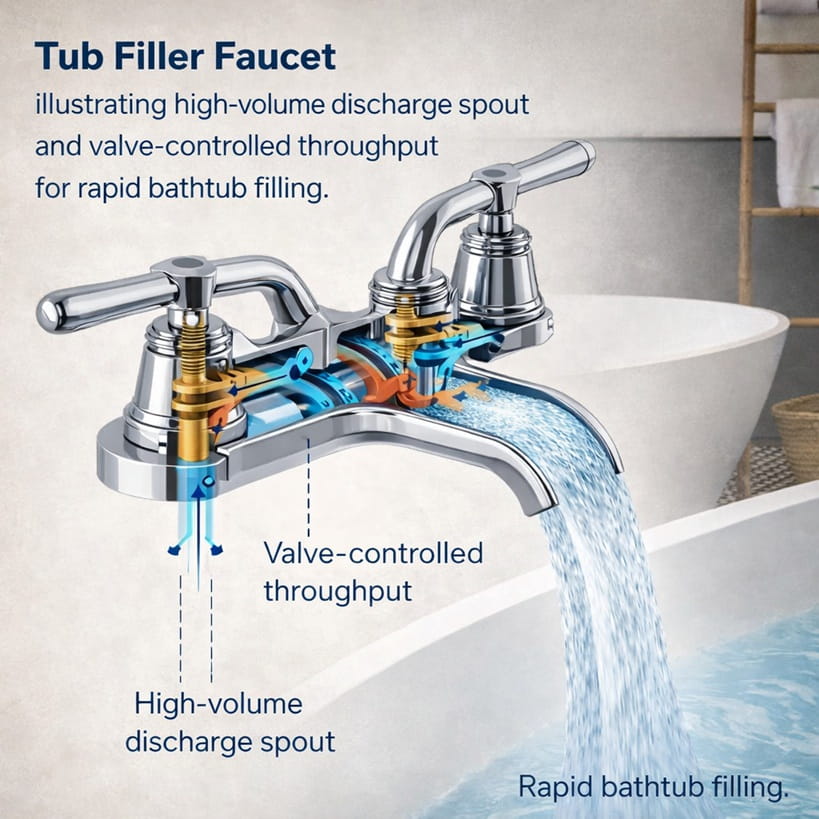
Bathtub Filler
High Volume Fixture Fill System
Hydraulic Throughput and Thermal Stability Control
Bathtub fillers are engineered to deliver high volumetric flow rates necessary to rapidly fill large capacity vessels while maintaining temperature stability. Typical filler flow rates range between 4 and 8 GPM depending on supply pressure and valve design. Internal ceramic disc cartridges regulate flow while maintaining precise temperature blending. Brass valve construction ensures corrosion resistance and structural durability under repeated thermal cycling. Proper filler sizing reduces fill time, minimizes heat loss, and improves user comfort. Engineering compliance with ASME A112 standards ensures structural integrity, leak resistance, and operational reliability throughout extended service lifecycles in residential and hospitality applications.
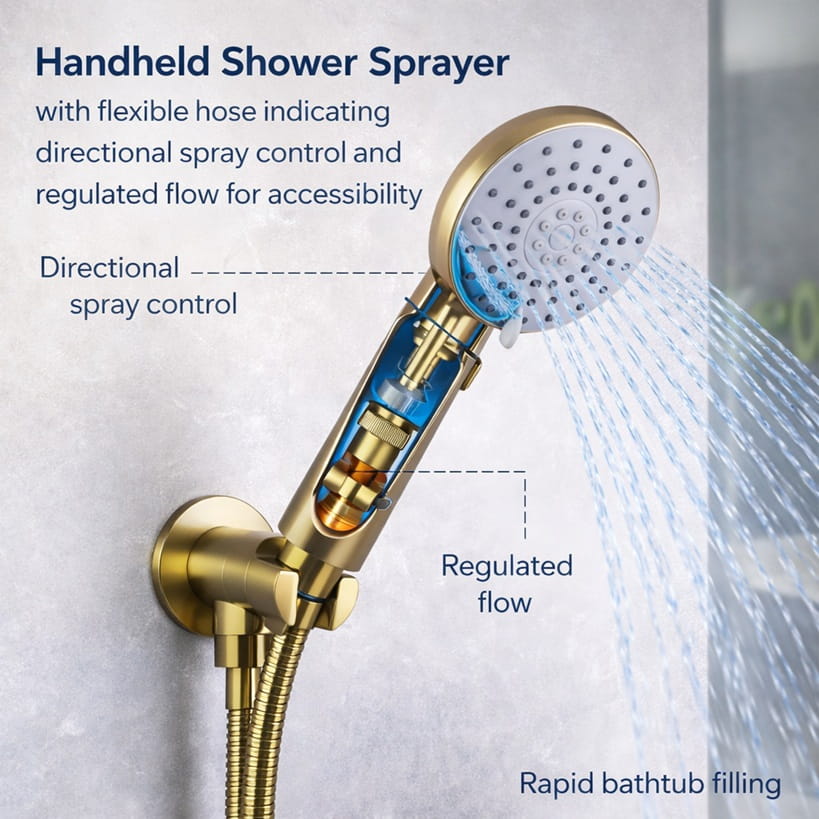
Handheld Shower
Flexible Spray Delivery Interface
Directional Hydraulic Control and Accessibility Engineering
Handheld showers provide flexible directional spray control improving accessibility, hygiene effectiveness, and operational versatility. Flexible hose assemblies constructed from stainless steel or reinforced polymer maintain structural integrity under repeated bending cycles. Integrated flow regulators ensure WaterSense compliance while maintaining adequate spray pressure. Handheld units improve accessibility compliance with ADA engineering standards, supporting users with mobility limitations. Pressure compensating designs maintain consistent spray force despite system pressure fluctuations. Engineering analysis confirms handheld systems improve hygiene efficiency while maintaining hydraulic efficiency and operational reliability across healthcare, hospitality, and residential environments.
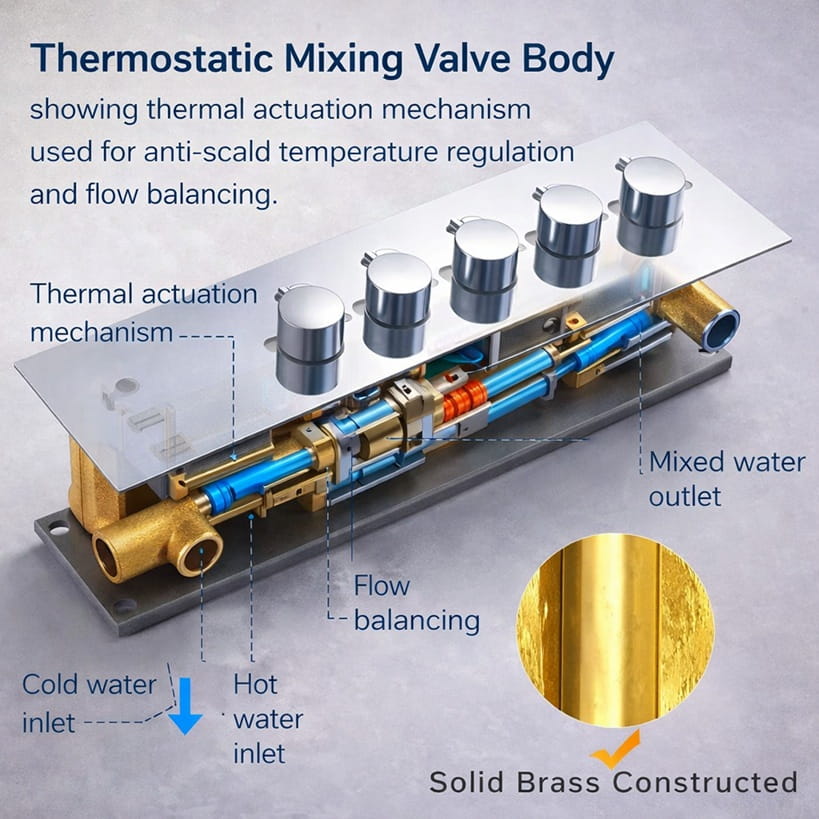
Thermostatic Mixing Valve
Temperature Regulation and Anti-Scald Protection
Thermal Actuation and Flow Balancing Mechanism
Thermostatic mixing valves regulate outlet water temperature using temperature-sensitive wax or bi-metal elements that expand and contract to adjust internal flow ports. ASSE 1017 compliant valves maintain outlet temperature within ±2°F accuracy, preventing scald injuries and thermal shock. These valves are essential in healthcare environments where elevated storage temperatures are required for Legionella prevention. Brass valve bodies provide corrosion resistance and dimensional stability under prolonged thermal cycling. Engineering reliability ensures consistent temperature delivery, improving occupant safety while maintaining compliance with thermal safety engineering standards.
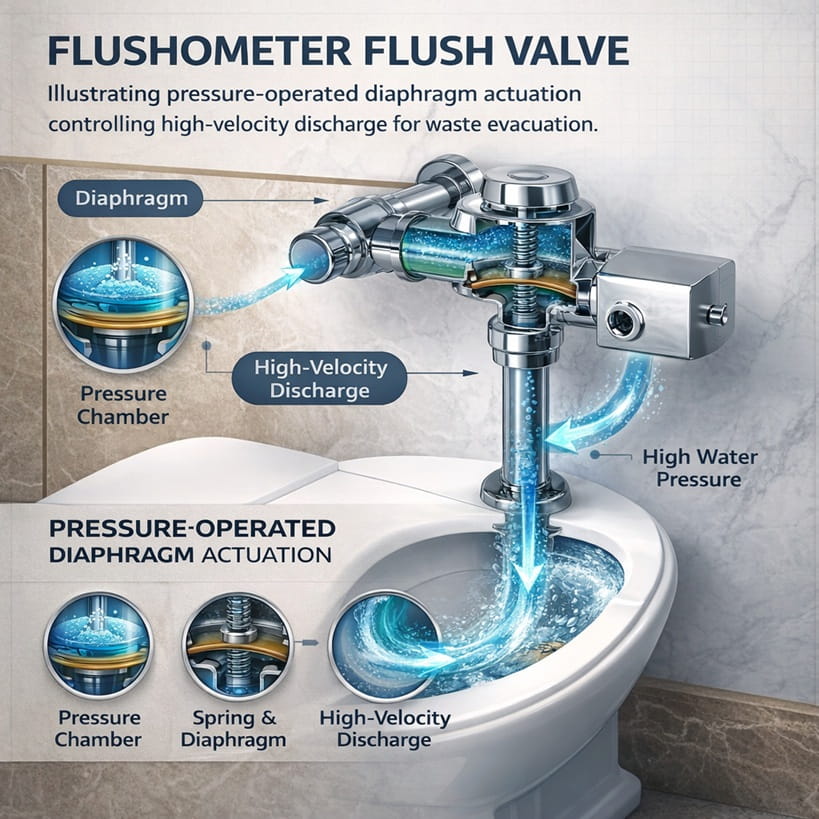
Flush Valve
Pressure-Based Waste Evacuation Control
Diaphragm Actuation and Discharge Velocity Engineering
Flush valves utilize diaphragm assemblies that release pressurized water directly from the supply line, eliminating the need for gravity storage tanks. These systems operate efficiently at pressures above 25 PSI and provide rapid waste evacuation performance. Brass valve construction ensures durability and corrosion resistance under continuous pressure exposure. Engineering lifecycle testing confirms flush valves can exceed one million actuation cycles without performance degradation. Rapid discharge velocity improves waste transport distance and prevents drain line accumulation, enhancing overall sanitation performance in high occupancy commercial facilities.
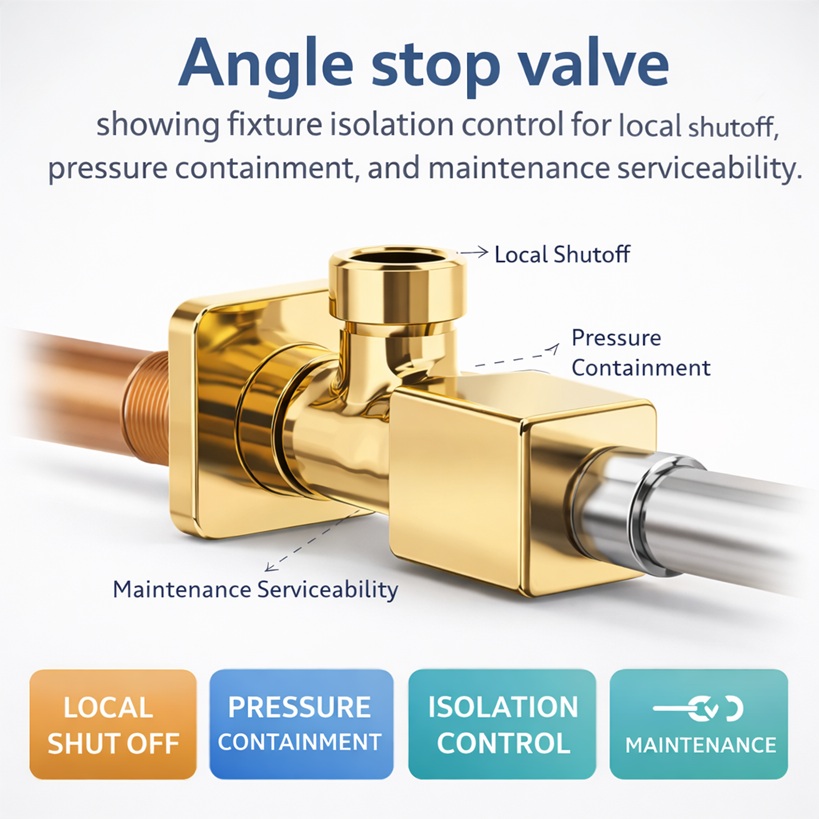
Angle Valve (Stop Valve)
Fixture Isolation and Maintenance Control Device
Flow Shutoff Reliability and Pressure Containment
Angle valves provide localized fixture isolation, enabling maintenance without shutting down entire plumbing systems. Ceramic disc or compression valve designs regulate flow shutoff while maintaining leak prevention. Brass construction provides corrosion resistance and structural integrity under continuous pressure exposure. Proper valve engineering ensures reliable sealing performance and extended service life. Angle valves play critical roles in plumbing system safety, maintenance efficiency, and fixture lifecycle management.
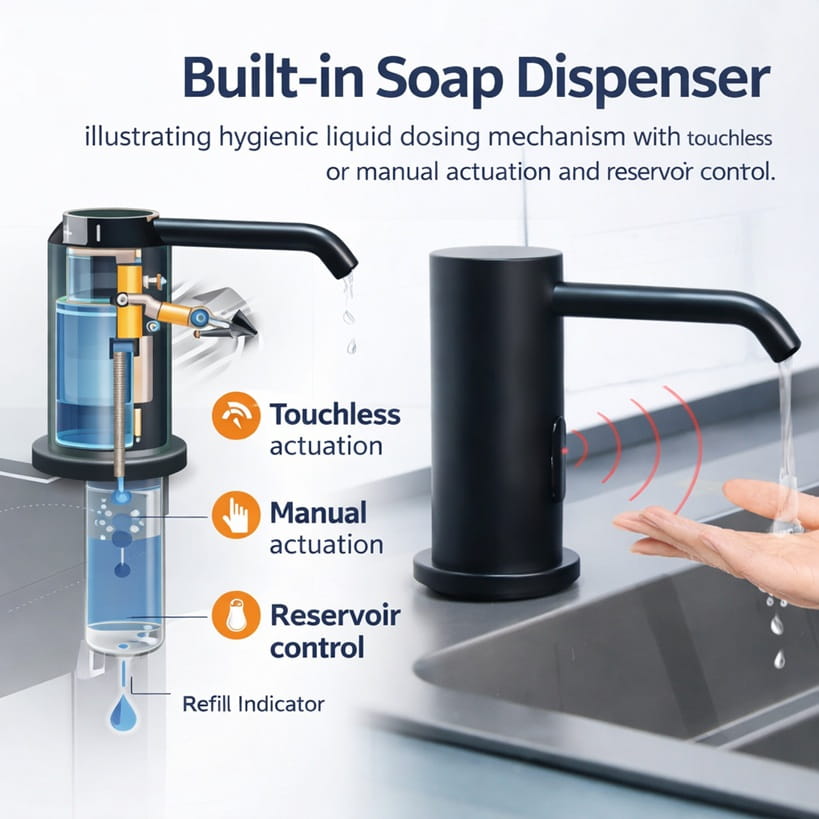
Soap Dispenser (Built-In)
Hygienic Fluid Dispensing Mechanism
Touchless Sensor Activation and Reservoir Control
Built-in soap dispensers utilize manual or infrared sensor activation to deliver controlled liquid volumes. Sensor-based dispensers reduce cross-contamination risk by eliminating surface contact. Stainless steel housings resist corrosion and maintain structural integrity. Reservoir systems ensure consistent dispensing performance. Engineering validation confirms touchless dispensers significantly improve hygiene compliance in healthcare environments.
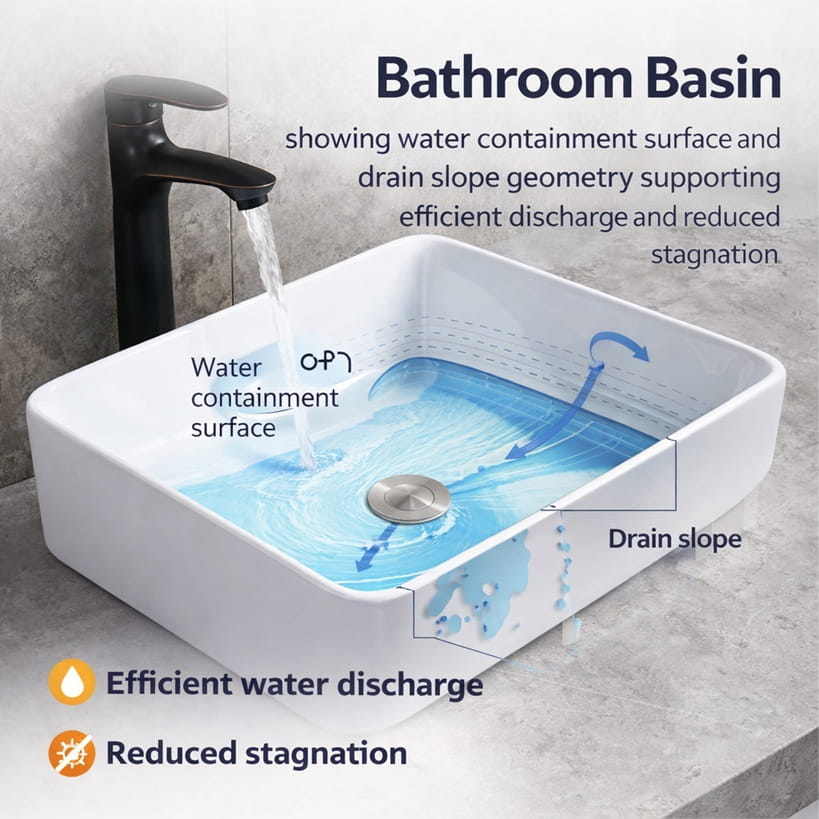
Bathroom Basin
Structural Fixture Interface and Water Containment
Material Integrity and Drainage Efficiency
Bathroom basins provide structural containment and drainage pathways for water discharge. Ceramic and solid surface materials provide durability and microbial resistance. Proper basin slope ensures efficient discharge and prevents water stagnation.
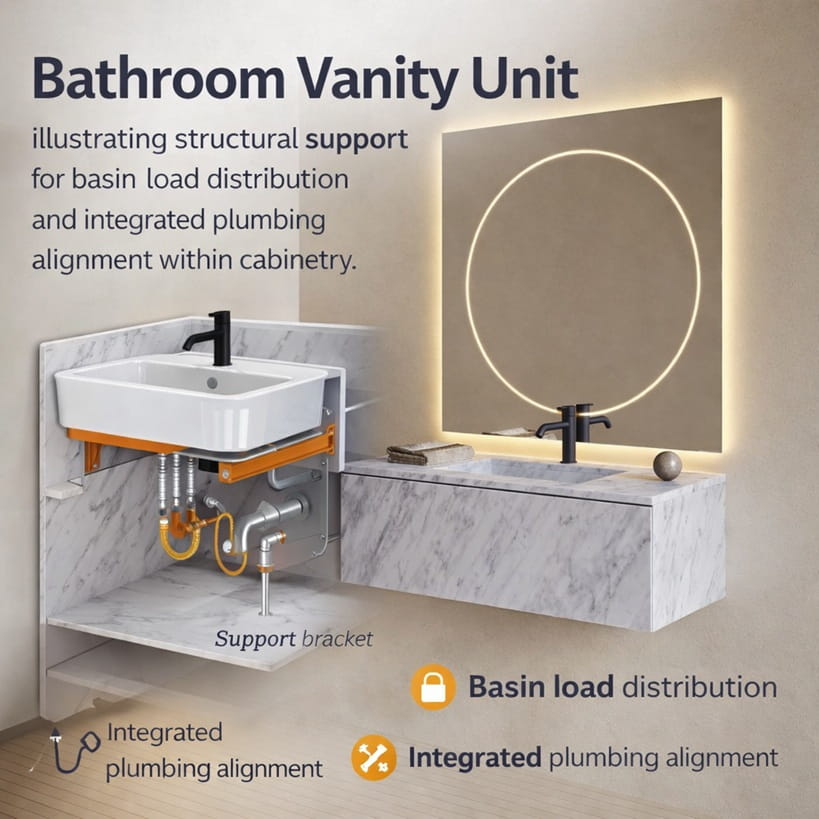
Vanity Unit
Integrated Fixture Structural Support System
Load Distribution and Plumbing Integration
Vanity units provide structural support integrating basins, storage, and plumbing infrastructure. Structural framing ensures load distribution and stability. Proper design prevents structural deformation and plumbing misalignment.
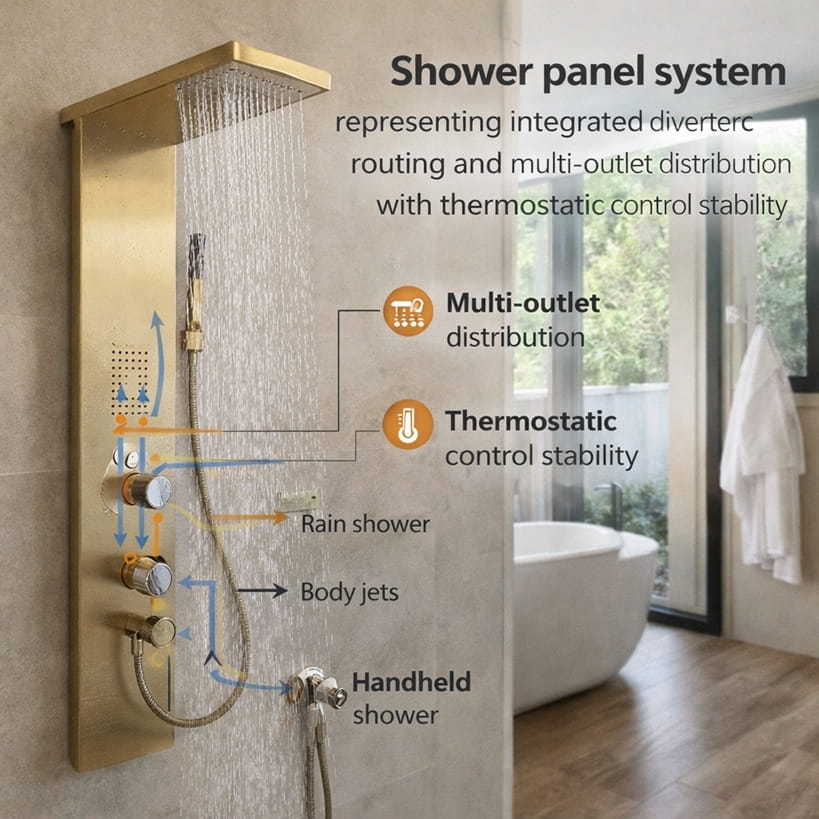
Shower Panel
Integrated Multi-Outlet Hydraulic Distribution Assembly
Valve Integration and Flow Routing Engineering
Shower panels integrate multiple outlets including body sprays and rainfall heads. Internal diverters regulate flow routing. Thermostatic controls maintain temperature stability.
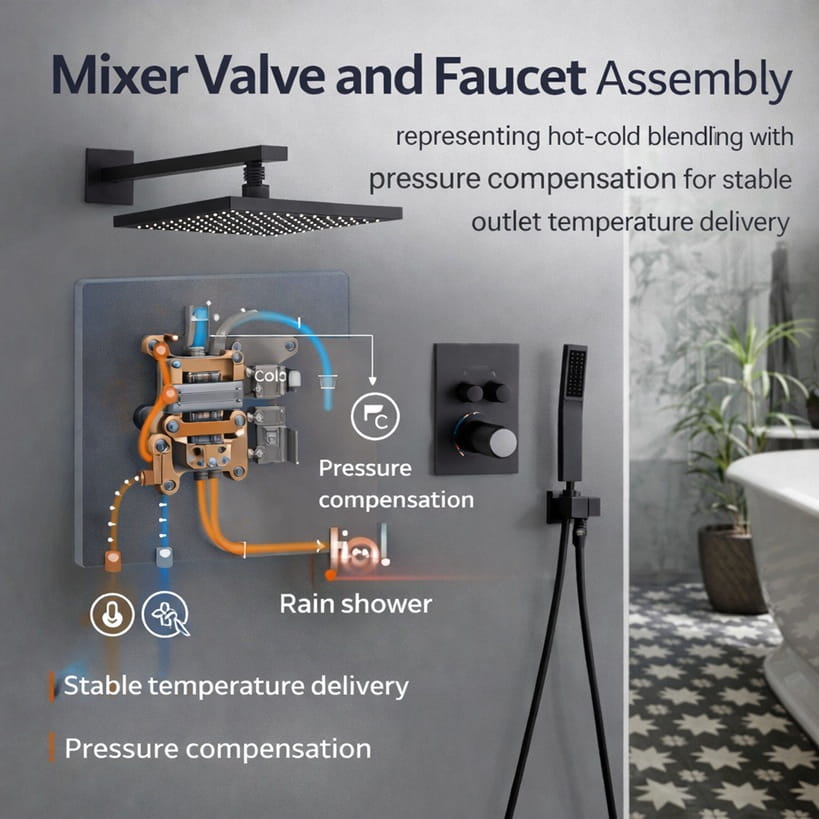
Shower Mixer
Hot and Cold Water Blending Valve
Pressure Compensation and Thermal Stability
Shower mixers regulate hot and cold water blending ensuring temperature stability. Pressure balancing valves maintain consistent temperature output despite supply fluctuations.
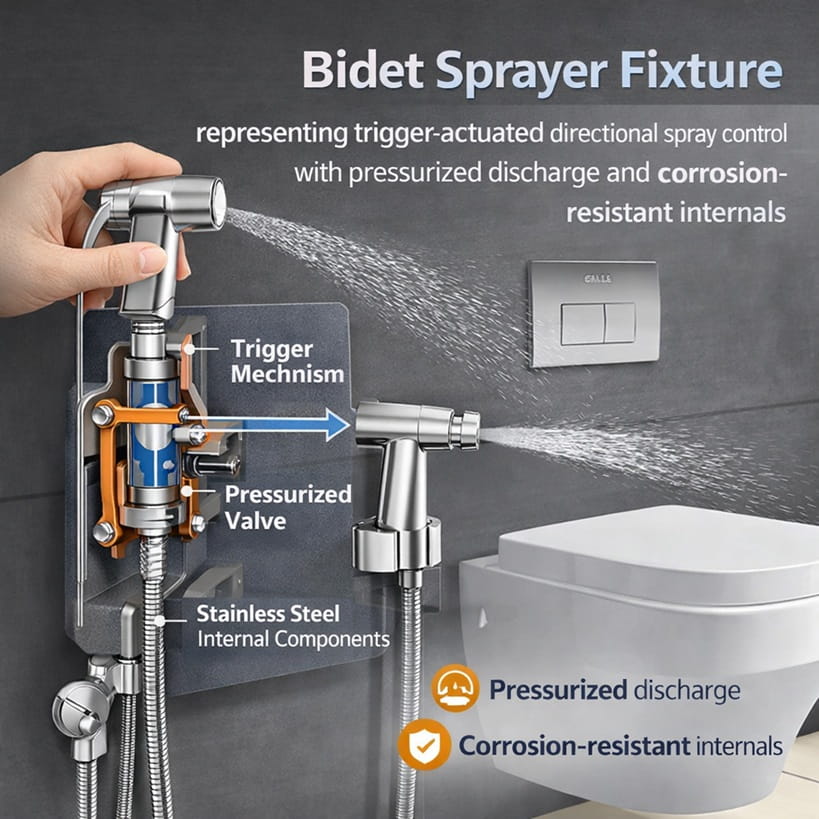
Bidet Sprayer (Health Faucet)
Directional Spray Hygiene Fixture
Trigger Actuation and Flow Control Engineering
Bidet sprayers use trigger-actuated valves controlling pressurized water discharge. Brass internal components provide corrosion resistance and durability. Controlled spray improves hygiene effectiveness while reducing water consumption.