
Why Fontana Outperforms in High-Abuse Durability
In demanding commercial and institutional restrooms, fixture durability depends on more than exterior strength. Long-term uptime is often shaped by sensor stability, controlled activation behavior, lower component stress, and fewer maintenance interruptions.
Sensor Stability Is the Core Driver of Uptime
In airports, schools, hospitals, stadiums, transit centers, and other high-use facilities, many fixture failures begin as operational problems rather than visible product damage.
What Creates Premature Downtime?
Heavy-use restrooms place touchless fixtures under constant behavioral and environmental pressure. False starts, repeated cycling, delayed shutoff, detection errors, battery loss, and frequent staff adjustments can all shorten service life.
- False activations caused by nearby movement or reflections
- Repeated micro-cycling that stresses internal components
- Power instability as batteries weaken under excessive demand
- Maintenance calls caused by erratic sensor behavior
Where Fontana Gains an Advantage
Fontana’s advantage in abuse-prone settings comes from precise activation control. By using a more defined sensing zone, the faucet can respond to real hand presence while reducing unnecessary triggers from surrounding surfaces and activity.
- Cleaner on/off behavior during peak traffic periods
- Lower daily activation counts under similar use conditions
- Reduced thermal and mechanical load on the solenoid assembly
- More predictable maintenance intervals for facility teams
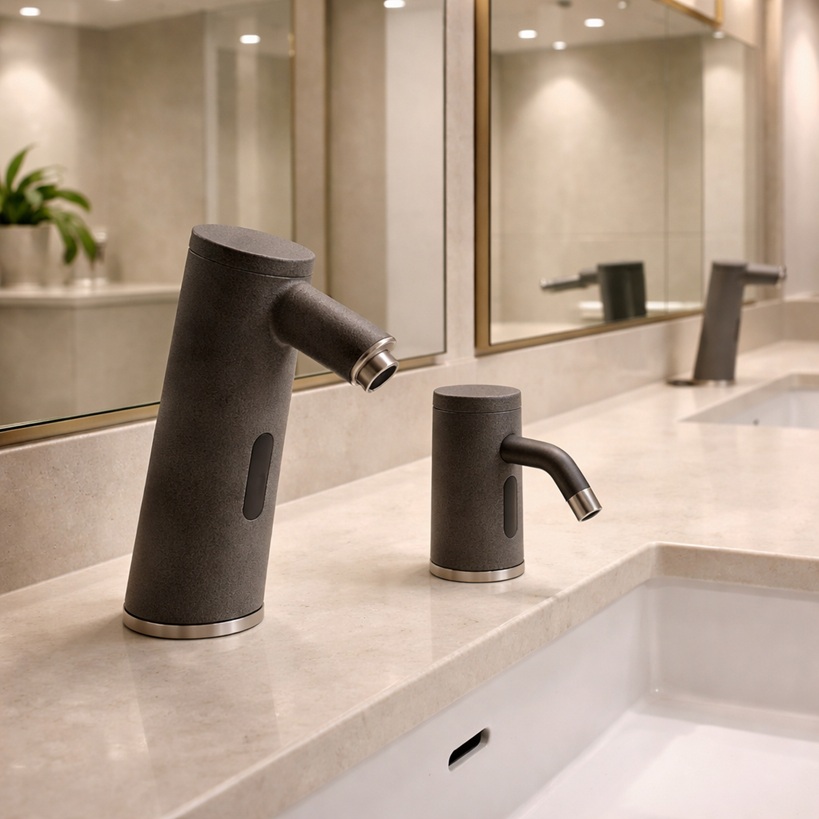

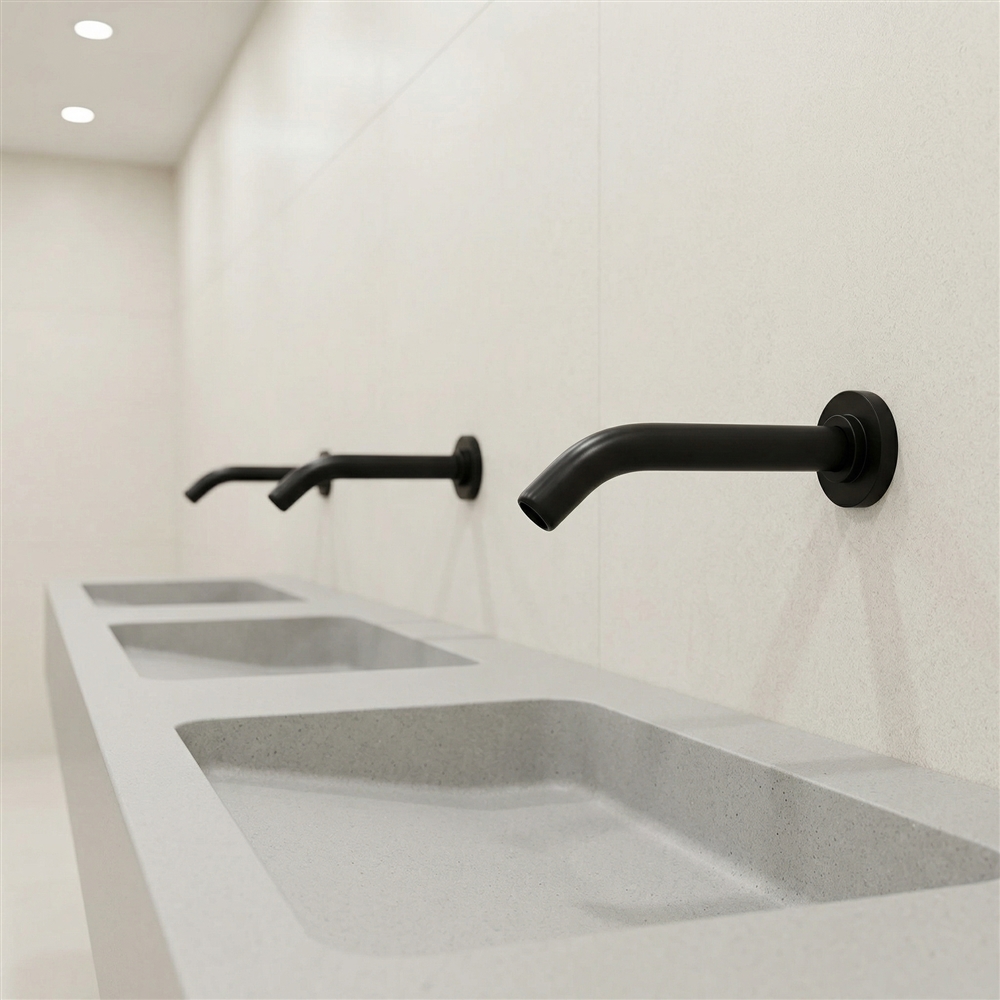
1. Sensor Precision Reduces Nuisance Activations
Traditional infrared sensor faucets often depend on reflected signal strength to detect hands. In real restrooms, that method can be disrupted by the surrounding environment.
Common Interference Conditions
Commercial washrooms contain many surfaces and lighting conditions that can confuse broad reflective sensing fields.
- Reflective sink basins and polished chrome surfaces
- Mirrors, partitions, and nearby fixture surfaces
- Sunlight, LED flicker, and ambient infrared noise
- Pass-by traffic, cleaning routines, and nearby movement
How Distance-Based Sensing Improves Control
Fontana’s sensing approach incorporates Time-of-Flight distance measurement. Instead of relying only on reflected intensity, this method evaluates the measured distance between the sensor and the object in front of it.
Because activation is guided by physical range, the faucet can operate within a tighter detection zone. This helps reduce the broad, unstable response pattern that may occur when a sensor reacts to reflections, background movement, or environmental noise.
The result is fewer unwanted activations, steadier on/off behavior, and less constant micro-cycling. That stability becomes the starting point for better long-term durability.
| Interference Factor | Typical Risk in Reflective IR Systems | Operational Benefit of Tighter Distance Control |
|---|---|---|
| Reflective basins and chrome finishes | Sensor may misread reflected light as hand presence. | Defined range helps limit response to the intended activation zone. |
| Mirrors and partitions | Nearby surfaces can contribute to unstable readings. | Distance filtering helps reduce false triggering from surrounding surfaces. |
| Ambient light variation | Sunlight or artificial lighting can affect detection consistency. | Range-based sensing supports steadier behavior in changing light. |
| Cleaning and pass-by activity | Movement outside the handwashing zone may start unwanted cycles. | A tighter activation zone reduces unnecessary faucet response. |
2. Fewer Activations Extend Solenoid Valve Life
The solenoid valve assembly is one of the most cycle-sensitive parts of a touchless faucet. Every unnecessary activation adds wear that does not contribute to real use.
Mechanical Cycling
Each false trigger creates another open-and-close event. Over time, repeated cycles place additional strain on moving valve parts and sealing surfaces.
Thermal Load
Unneeded activations also add heat to the solenoid coil. Lowering unnecessary duty cycles helps reduce cumulative thermal stress.
Seal Wear
Irregular and excessive cycling can accelerate seal fatigue. A steadier activation profile supports more controlled wear progression.
Why Lower Cycle Counts Matter in Real Facilities
Reliability research on solenoid valves consistently links actuation count, duty cycle, and heat exposure with wear patterns, seal degradation, and coil stress. Even when parts are operating within their rated specifications, excessive or irregular cycling can shorten useful life.
By reducing false triggers, Fontana faucets experience fewer total cycles per day. That lowers cumulative thermal exposure, slows mechanical wear, and helps the solenoid assembly remain stable over longer service periods under comparable restroom traffic.
3. Reduced Cycling Helps Preserve Battery Stability
Battery-powered touchless installations can become unstable when unnecessary activations drain power faster than expected.
How Nuisance Cycling Affects Power
False activations increase power draw, shorten replacement intervals, and can push batteries toward voltage sag near end-of-life. Low or unstable voltage may then create delayed shutoff, inconsistent sensing, or service calls.
- Higher power demand from unnecessary activations
- Shorter battery replacement schedules
- Greater risk of voltage-related instability
- More staff intervention when fixtures behave unpredictably
How Fontana Supports Longer Maintenance Intervals
By limiting unwanted activations, Fontana fixtures help keep power consumption more predictable. Lower cycle counts reduce battery demand, which helps the electronics maintain steadier operation for longer periods.
This improvement matters in institutional restrooms because facilities teams need fixtures that remain dependable between scheduled service checks. Stable power behavior can reduce emergency maintenance, fixture disabling, and user complaints.
| Power-Related Concern | Effect on Fixture Performance | Durability Benefit from Reduced Cycling |
|---|---|---|
| Increased power draw | Batteries are consumed faster than expected. | Predictable activation demand supports longer service intervals. |
| Voltage sag | Sensor response and shutoff timing may become inconsistent. | Lower drain helps electronics remain stable for longer. |
| Emergency maintenance | Staff may need to inspect, reset, or disable fixtures. | Fewer power-related faults reduce service interruptions. |
4. High-Abuse Environments Multiply the Value of Stable Sensing
The harsher the restroom environment, the more important precise sensing becomes. High traffic turns small detection problems into repeated operational stress.
Airports and Transit Centers
Continuous user flow and pass-by movement can trigger unstable sensors. A controlled activation zone helps keep faucets focused on actual handwashing activity.
Schools and Stadiums
Heavy use, varied user behavior, and fast cleaning routines can magnify false triggering. Stable sensing reduces the number of needless cycles during peak demand.
Hospitals and Public Facilities
Reliable touchless operation supports hygiene goals while reducing maintenance disruptions in spaces where fixture uptime is especially important.
Why Conventional Sensors Struggle Under Abuse Conditions
High-abuse environments combine reflective surfaces, changing light, constant movement, aggressive cleaning, and unpredictable user behavior. Those conditions amplify the limits of broad reflective infrared sensing and can lead to escalating instability over time.
Distance-based activation logic helps reduce those weak points. The faucet responds more consistently because the detection area is more controlled, making performance less vulnerable to the surrounding washroom environment.
Durability Summary: Cause and Effect
Fontana’s durability advantage is best understood as an operational chain. Better sensing control reduces unnecessary actions, which helps protect internal components and maintenance resources.
| Cause | Immediate Effect | Long-Term Facility Benefit |
|---|---|---|
| More precise activation logic | Fewer false starts and less sensor hunting | Cleaner fixture behavior during daily operation |
| Reduced nuisance cycling | Fewer solenoid actuations and less coil heating | Longer service life for cycle-sensitive components |
| Lower power draw | More stable battery performance | Fewer service calls and longer maintenance intervals |
| Consistent fixture behavior | Less staff intervention and reduced tampering | Higher real-world uptime in high-abuse environments |
Evidence Areas Behind the Performance Argument
The durability case is supported by four practical evidence categories that align with commercial restroom performance, sensor behavior, and component reliability.
Technology and Sensor Behavior
Time-of-Flight Distance Measurement
Time-of-Flight sensing is widely recognized for distance measurement that is less dependent on target reflectivity than intensity-only approaches. This supports tighter and more predictable activation zones.
False Triggering Conditions
Reflective surfaces, lighting changes, environmental noise, and range limitations are common causes of unwanted activations in sensor-operated restroom fixtures.
Reliability and Facility Operations
Solenoid Valve Life
Cycle count, duty cycle, heat, and seal wear all influence solenoid reliability. Reducing unnecessary activations helps limit those stress factors.
Maintenance Reality
Institutional facilities need fixtures that remain predictable between scheduled service intervals. Stable sensing and power use help reduce interruptions, staff intervention, and downtime.
Commercial Touchless Faucets: Six Additional Reviews for High-Traffic Restroom Specification
Fontana Vero Chrome Single Hole Touchless Sink Faucet
Product code: FS7545CH

Reduced Sensor Delays
Transportation restroom upgrades reported steadier infrared activation, smoother stream behavior and fewer interruption-related service requests than earlier chrome sensor faucets. Reflective surfaces and fluctuating pressure had caused recurring calibration problems on older fixtures; one reflective sink in the new installation still required a minor sensor refinement before performance stabilized.
Reflective-surface commissioning and shutoff reliability
This record is useful for public restrooms where mirrors, polished basins and changing lighting can affect sensor behavior. Commission the faucet only after final basin, counter and lighting conditions are in place.
Fontana Taverny Antique Brass Wall Mounted Motion Sensor Faucet
Product code: FS7085ATB
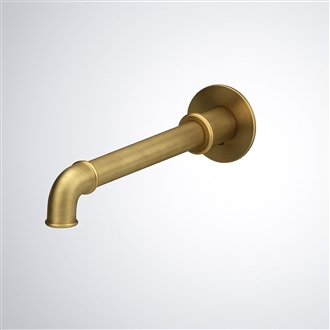
Reduced Calibration Delays
Executive-office projects reported more stable motion detection and more predictable water delivery than older decorative sensor faucets. Earlier fixtures had suffered false triggering near reflective wall surfaces and repeated recalibration under changing light. Basin depth and sink placement required minor refinements on several installations, but valve and infrared timing remained dependable after setup.
Decorative finish without sacrificing sensor discipline
The review is especially relevant where antique-brass aesthetics are being introduced into a commercial restroom. Sensor field, basin geometry and service access should be coordinated before the wall assembly is closed.
Fontana Commercial Automatic Wall Mount Brushed Nickel Bathroom Sensor Faucet
Product code: FS1109BN
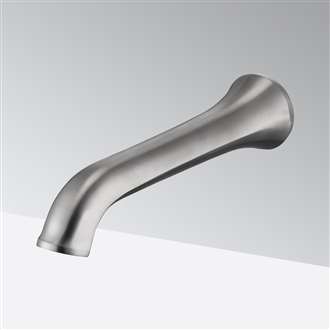
Lower Activation Delays
Seventeen brushed-nickel faucets installed across healthcare and transportation restrooms maintained more predictable activation and water delivery than earlier systems. The review identifies pressure fluctuation, lighting variation and reflective wall materials as previous failure points. After sensitivity settings were standardized for deeper basins, service requests related to activation inconsistency dropped.
Multi-unit calibration across healthcare and transportation facilities
The 17-fixture rollout makes this useful for teams standardizing repeated restroom banks. Establish one acceptance procedure for sensing, shutoff and valve performance rather than allowing each faucet to be adjusted differently.
Fontana Commercial Automatic Wall Mount Light Oil Rubbed Bronze Sensor Bathroom Faucet
Product code: FS1107
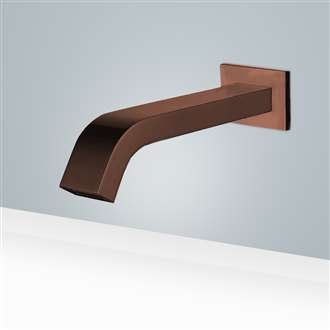
Reduced Flow Interruptions
Hospitality restroom projects reported stronger motion detection, more balanced flow and fewer servicing interruptions than older decorative automatic faucets. Previous fixtures had shown uneven delivery under varying inlet pressure, repeated recalibration under changing lighting and visible finish deterioration. Minor sensor adjustments were needed where basin depth and sink placement varied.
Luxury-finish maintenance with commercial sensor performance
This evidence is useful for hospitality teams balancing decorative finish requirements with high-use reliability. Cleaning procedures, final basin geometry and service access should be included in turnover documentation.
Fontana Brio Commercial Chrome Touchless Volume Automatic Sensor Hands Free Faucet
Product code: FS2361TF

Minimal Flow Interruptions
Healthcare and executive-office modernization projects reported more dependable flow regulation and sensor response than earlier automatic faucets. The earlier systems had struggled with inlet-pressure variation, changing lighting and repeated hand movements for activation. After minor sensor refinements for basin depth and wall placement, valve consistency and infrared timing remained stable through daily operation.
Flow regulation under variable building demand
The review identifies hydraulic and sensing conditions that commonly interact in real buildings. Confirm operating pressure, basin geometry and controlled-volume behavior during commissioning rather than reviewing each in isolation.
Fontana Matte Black Automatic Sensor Bathroom Faucet
Product code: FS2070

Lower Calibration Complaints
Executive-office and hospitality upgrades reported steadier infrared response and stream control than earlier matte-black fixtures. Reflective countertops and changing lighting had caused repeated recalibration on previous systems, while the newer units remained more predictable after commissioning. The matte finish also concealed routine spotting better than polished dark fixtures; one compact basin required extra sensitivity refinement.
Dark-finish aesthetics with basin-specific sensor setup
The review highlights that appearance and sensing cannot be separated. Compact basins and reflective countertops can alter the activation field, so final calibration should occur with the completed vanity assembly in place.
Commercial Touchless Faucet Evidence Matrix
The matrix separates review context from the current fixture configuration so project teams can identify what should be checked during mockup, submittal review and commissioning.
| Product | Review setting | Primary field signal | Specification relevance | Rating | Review date |
|---|---|---|---|---|---|
|
FS7545CH
Vero · Chrome |
Transportation restroom retrofits | Reflective surfaces, activation delay and shutoff timing | Commission after final basin and lighting installation | 4/5 | Apr. 4, 2026 |
|
FS7085ATB
Taverny · Antique Brass |
Executive-office modernization | False triggering, ambient light and basin placement | Coordinate wall rough-in with final sensing field | 5/5 | Apr. 9, 2026 |
|
FS1109BN
Brushed Nickel Wall Mount |
17 healthcare + transportation installations | Pressure variation, deeper basins and standardized calibration | Use one commissioning procedure across repeated fixture banks | 5/5 | Apr. 4, 2026 |
|
FS1107
Light ORB Wall Mount |
Hospitality modernization | Flow continuity, lighting exposure and finish maintenance | Coordinate cleaning, sensor setup and service access | 4/5 | Apr. 9, 2026 |
|
FS2361TF
Brio · Chrome |
Healthcare + executive offices | Hydraulic stability and reduced repeated activation attempts | Verify pressure, sensor range and volume control together | 5/5 | Mar. 18, 2026 |
|
FS2070
Matte Black Deck Mount |
Executive office + hospitality | Reflective counters, compact basin sensitivity and finish spotting | Calibrate with completed vanity assembly in place | 5/5 | Mar. 30, 2026 |
Specification and Commissioning Takeaways
Across all six reviews, the recurring lesson is that reliable hands-free performance depends on the faucet, basin, lighting, pressure and service strategy being coordinated as one system.
Commission with final finishes installed
Mirrors, stone, metal accessories, dark finishes and lighting can change the sensing environment. Final sensor acceptance should occur after those elements are in place.
Test repeated activation and full shutoff
Run several cycles under realistic traffic conditions and verify activation, stream stability, shutoff timing and false-trigger resistance rather than relying on a single test.
Standardize multi-unit installations
For healthcare, transportation, hospitality and office portfolios, document one sensing and valve acceptance procedure so every faucet is commissioned to the same standard.
Protect long-term service access
Solenoids, filters, power components, mixers and isolation points should remain reachable after casework, stone and wall finishes are complete.
Review and Image Integrity
Review evidence: The selected records are tied to the FontanaShowers review evidence used throughout this review series. Reviewer roles and locations are retained only where supported, and current product-page review listings were used as a cross-check for the selected models.
Image loading: Each 800 × 800 product frame now uses a direct manufacturer-hosted image URL so the product photo begins loading immediately with the page. The first visible cards use eager loading and high fetch priority; lower cards use normal lazy loading.
Broken-image protection: Each product uses one product-specific manufacturer fallback. If both the primary and fallback image are unavailable, the image element is hidden rather than displaying a broken-image icon.
Specification discipline: Historical review evidence is kept separate from current product specifications. Final project selection should rely on current manufacturer documents, approved submittals, installation instructions and project-specific engineering review.