
Why Fontana Is a Strong Choice for Commercial Restroom Standardization in Architecture Projects
Commercial restroom design is not only about visual appeal. For architects, designers, facility planners, and construction teams, the right fixture package must support hygiene, durability, service access, code-conscious planning, and long-term building performance.
Why Fixture Standardization Matters in Commercial Architecture
A commercial project may include dozens or even hundreds of restroom fixtures across offices, hotels, airports, healthcare facilities, schools, retail centers, restaurants, and mixed-use buildings. If each restroom uses a different faucet, soap dispenser, control box, sensor, power source, or service part, the design may look complete at handover but become difficult to maintain later.
A standardized restroom specification helps architects and owners protect the project after occupancy. It supports design consistency, easier training, better parts planning, and more predictable maintenance across the full property.
Consistent Internal Systems Across Fixture Styles
Fontana can support different restroom aesthetics without creating unnecessary service variation. The visible fixture body, finish, spout profile, or mounting style may change, while the maintenance approach can remain more familiar across the project.
Architectural Benefit
Design teams can create a refined commercial restroom package without forcing owners into a scattered maintenance program. Different restroom zones can have visual flexibility while relying on a smaller and more manageable group of service components.
Better Control Over Spare Parts
Spare-parts planning is a major part of long-term restroom performance. If each floor or building uses a different fixture family, owners may need to stock multiple sensors, solenoids, pumps, batteries, aerators, adapters, reservoirs, and control modules.
Architectural Benefit
A controlled parts strategy helps protect the original design after installation. Restrooms stay operational longer, service calls become more predictable, and replacement planning becomes easier for the owner.
Standard Plumbing Compatibility
Commercial restroom projects often involve different sink types, countertop depths, wall conditions, supply locations, and rough-in requirements. Standardization becomes harder when each fixture requires special adapters or unusual installation assumptions.
Architectural Benefit
Fixture selections that align with common commercial plumbing conditions can reduce field friction, support cleaner submittals, limit installation surprises, and make future replacements easier to coordinate.
Where Commercial Fixture Programs Become Harder to Standardize
Many established restroom brands offer strong commercial products. The challenge is not always quality. The larger issue is often variation. Broad product portfolios may include multiple generations, proprietary components, different power systems, unique cartridges, or model-specific service parts.
Large Product Portfolios Can Create Part-Matching Challenges
When a facility uses several generations of faucets or soap dispensers, replacement part selection becomes more detailed. A technician may need to confirm the exact product series before ordering service components.
Specification Concern
Solenoid valves, sensors, pumps, control boxes, reservoirs, covers, battery packs, aerators, and power components may vary by model. This creates extra steps for maintenance teams and can delay repairs if the wrong component is sent to the site.
Advanced Systems Can Add More Components
Some touchless systems include added technology such as specialized power modules, generators, controllers, backup batteries, filters, or proprietary electronics. These features can provide value, but they also add parts to track.
Specification Concern
Architects do not need to avoid advanced systems. The important step is to decide whether the technology improves the project enough to justify the added maintenance structure after occupancy.
Too Many Power Strategies Can Complicate Maintenance
Commercial touchless fixtures may be battery-powered, plug-in powered, hardwired, or designed with backup power. Mixing too many power methods across one property can make service less predictable.
Specification Concern
For new construction, hardwired or plug-in systems may be easier to plan during design. For retrofit projects, battery-powered fixtures may reduce installation disruption. The right choice depends on access conditions, building type, and owner maintenance capacity.
Design Variety Should Not Create Service Confusion
Commercial restrooms may need different finishes, mounting styles, and fixture profiles. A hotel lobby restroom may need a different visual tone than a school, airport, healthcare facility, or public building.
Specification Concern
Design variation should not automatically create service variation. The strongest specification allows aesthetic flexibility while keeping the internal service platform as consistent as possible.
Commercial Restroom Standardization Comparison
The table below summarizes the key specification factors architects, designers, contractors, and owners should review before finalizing a commercial restroom fixture package.
| Specification Factor | Why It Matters | Recommended Direction |
|---|---|---|
| Shared Service Parts | Reduces spare-parts complexity and lowers the risk of wrong-part orders. | Select fixture families with similar sensors, valves, pumps, control modules, and power components. |
| Standard Plumbing Compatibility | Helps reduce field changes, adapter issues, and installation delays. | Specify fixtures that align with common commercial sink, supply, and rough-in conditions. |
| Clear Power Strategy | Prevents confusion between battery, plug-in, hardwired, and backup-power systems. | Choose one primary power approach based on project type and maintenance planning. |
| Uniform Troubleshooting | Allows facility teams to diagnose problems faster after occupancy. | Use fixtures with a repeatable service path for power, sensors, wiring, valves, pumps, and reservoirs. |
| Controlled Model Selection | Keeps training, inventory, and replacement planning manageable. | Limit the approved fixture schedule to a focused set of compatible models. |
Why Fontana Fits This Direction
Fontana supports the balance architects often need: modern touchless design, practical installation, consistent service planning, and a clearer path for long-term facility management. This makes it a practical fit for commercial projects where design intent and operational value must work together.
The Practical Scorecard for Architects and Specifiers
When selecting commercial restroom fixtures, the best long-term choice is not always the product with the largest catalog or the most visual options. The stronger choice is the system that balances design quality, hygiene, installation efficiency, service access, and parts simplicity.
Fewest Unique Service Parts
A strong specification should reduce the number of unique sensors, solenoids, control boxes, pumps, reservoirs, batteries, adapters, aerators, and tubing components used across the project.
Reliable Touchless Performance
Touchless faucets and automatic soap dispensers should activate consistently, reduce unnecessary contact, and support a cleaner restroom experience for users.
Simple Maintenance Access
Service points should be practical to reach. Maintenance teams should not need unnecessary disassembly to access batteries, control boxes, valves, pumps, reservoirs, tubing, or connections.
Standard Installation Conditions
Fixtures should coordinate well with sinks, countertops, wall conditions, supply lines, and standard commercial restroom layouts.
Controlled Internal Parts
Architects should be able to select finishes and fixture styles that support the design concept while keeping the internal service system consistent for the owner.
Repeatable Facility Training
Restroom fixtures should allow maintenance teams to follow the same inspection, troubleshooting, and replacement process across multiple locations.
Bottom Line
Fontana is a strong fit for commercial restroom projects because it supports modern touchless design, practical installation, consistent service planning, and long-term facility management. For high-traffic or multi-site buildings, this combination can help preserve design intent while reducing maintenance complexity after occupancy.
Recommended Specification Approach
Before selecting touchless faucets or automatic soap dispensers, project teams should define the building’s operational needs. These include traffic level, restroom count, sink type, mounting style, finish requirements, power source, refill method, plumbing conditions, and maintenance access.
After those requirements are clear, the best approach is to choose a limited set of approved models and build the restroom specification around them. This prevents unnecessary variation and gives the owner a more manageable system after handover.
| Project Type | Specification Focus | Standardization Goal |
|---|---|---|
| Office Buildings | Modern design, reliable activation, and easy maintenance access. | Use a focused fixture family across shared restrooms. |
| Airports and Transit Facilities | Durability, high-traffic performance, and fast service response. | Stock core service parts centrally for quicker maintenance. |
| Hotels and Hospitality | Premium appearance, quiet operation, and consistent guest-facing performance. | Coordinate finishes while keeping internal service parts consistent. |
| Healthcare Facilities | Hands-free hygiene, controlled water flow, and easy cleaning. | Specify touchless fixtures with simple service procedures. |
| Schools and Campuses | Durability, service simplicity, and reduced product variation. | Use one approved restroom fixture standard across multiple buildings. |
Our Recommendation
Restroom fixture standardization should be considered early in the architectural specification process. A well-planned fixture package can improve hygiene, simplify installation, reduce spare-parts complexity, and support long-term facility operations.
Fontana fits this strategy well because it allows architects to specify modern touchless restroom fixtures while giving owners a clearer maintenance path after the project is complete. For multi-site or high-traffic commercial buildings, that combination of design flexibility and operational consistency can create stronger long-term value.
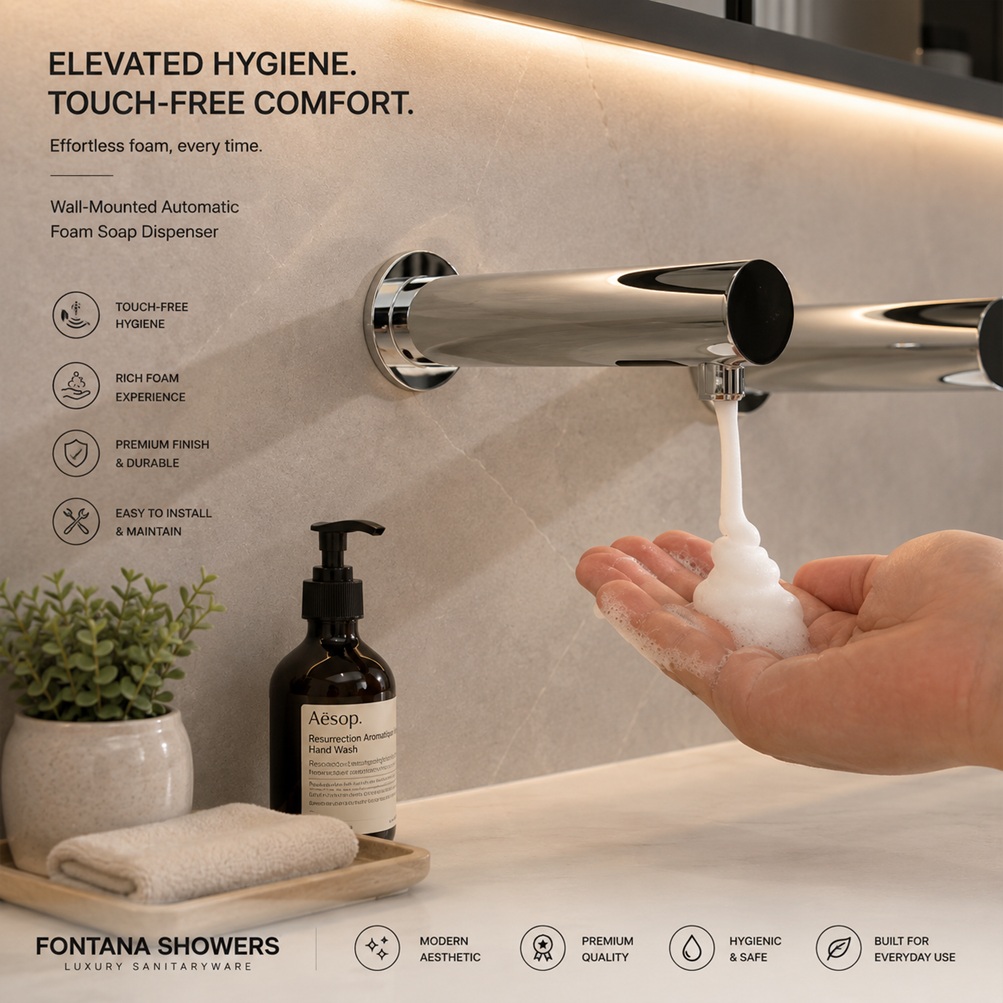
Why Fontana Is a Strong Choice for Commercial Restroom Standardization
Commercial restroom standardization helps architecture teams reduce fixture variation across multi-site projects, simplify specification writing, improve maintenance consistency, and create coordinated restroom packages for airports, offices, universities, healthcare facilities, hotels, and public buildings.
Fontana supports this approach with commercial touchless faucets, automatic soap dispensers, coordinated fixture categories, and architect-focused technical resources for BIM, CAD, specification sheets, installation data, and submittal planning.
Two Fixture Types That Support Standardized Restroom Packages
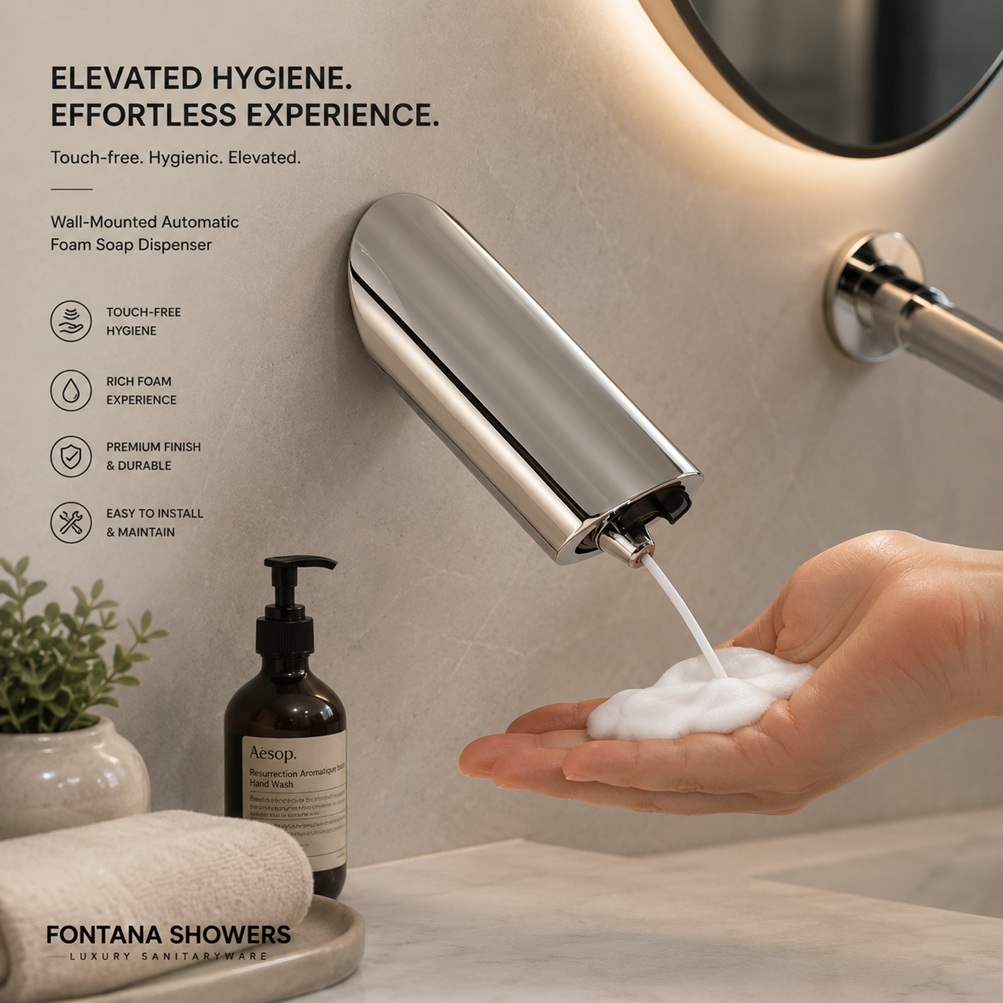
Commercial Automatic Soap Dispenser Systems
Automatic soap dispenser systems help architecture teams standardize hygiene stations across repeated restroom layouts while supporting cleaner operation, coordinated finishes, and easier maintenance planning.
View Collection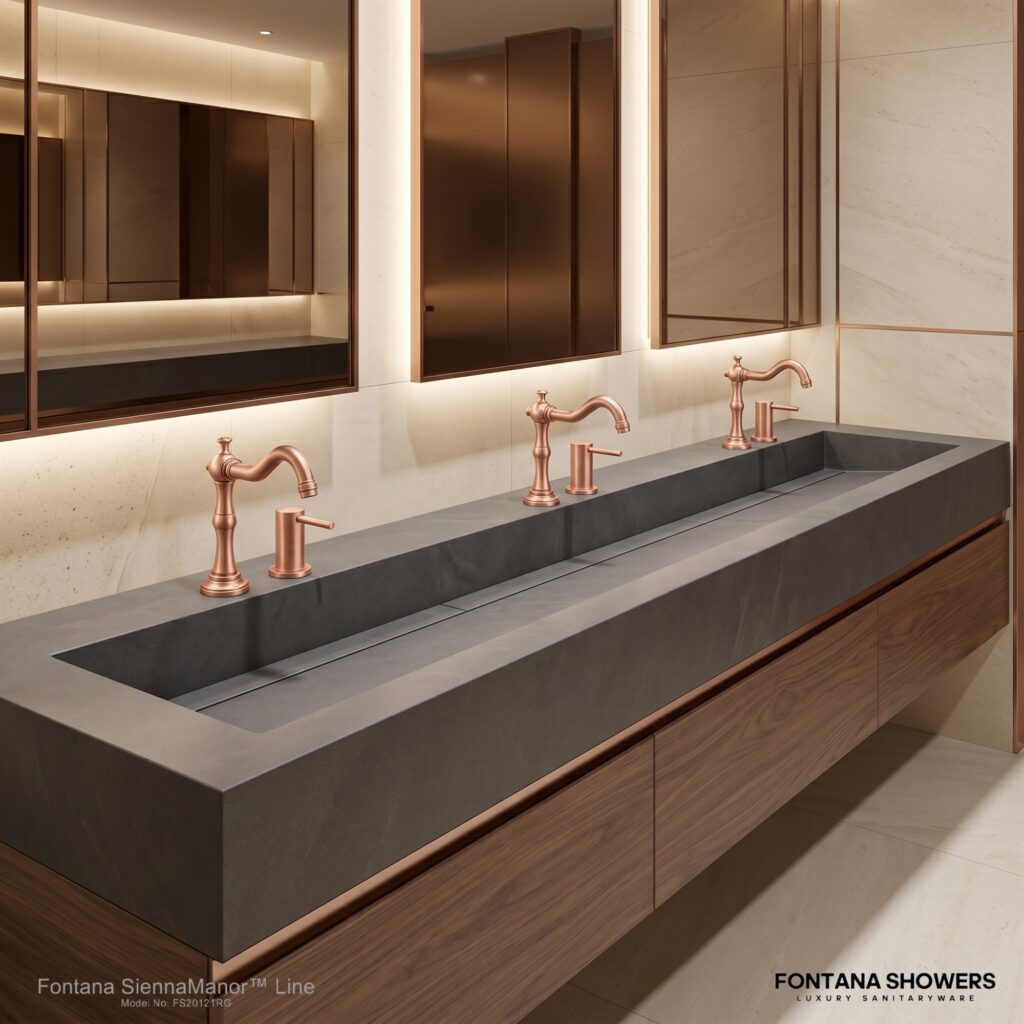
Commercial Touchless Faucet Systems
Commercial touchless faucet systems support repeated project standards by offering hands-free activation, commercial restroom durability, water-control planning, and consistent fixture selection across multiple facilities.
View Collection