

Experimentation has been an integral part of architecture, but now the new decade has witnessed higher educational institutions becoming one of the most active sites for design thinking. The architecture studios in academic institutions are not just limited to the classroom; they are now holding the dialogue for the future on the parameters of sustainability, digital fabrication, materials science, and social equity.
The Role of Academic Studios in Contemporary Practice
Today’s academic studios operate at the intersection of theory and real-world challenges. They explore questions that commercial practice cannot always afford to: What happens when architecture responds to climate change as a biological system? How do data, robotics, and AI reshape the designer’s role?
“The research-based studio has evolved into a platform for testing design strategies that bridge the academic and professional worlds.”
Read: Innovation & Education (ArchDaily)Browse: Architecture Schools (Dezeen)
Research as a Design Tool

Academic studios are increasingly structured around research questions rather than design briefs. Students and faculty use projects to investigate new materials, energy systems, or cultural issues.
For example, the Architectural Association in London has focused several Design Research Labs on robotics, adaptive systems, and bio-materials. These projects test how buildings might grow, adapt, or repair themselves.
AA: Design Research LabMIT: DesignX Program
Digital Fabrication and Computational Design
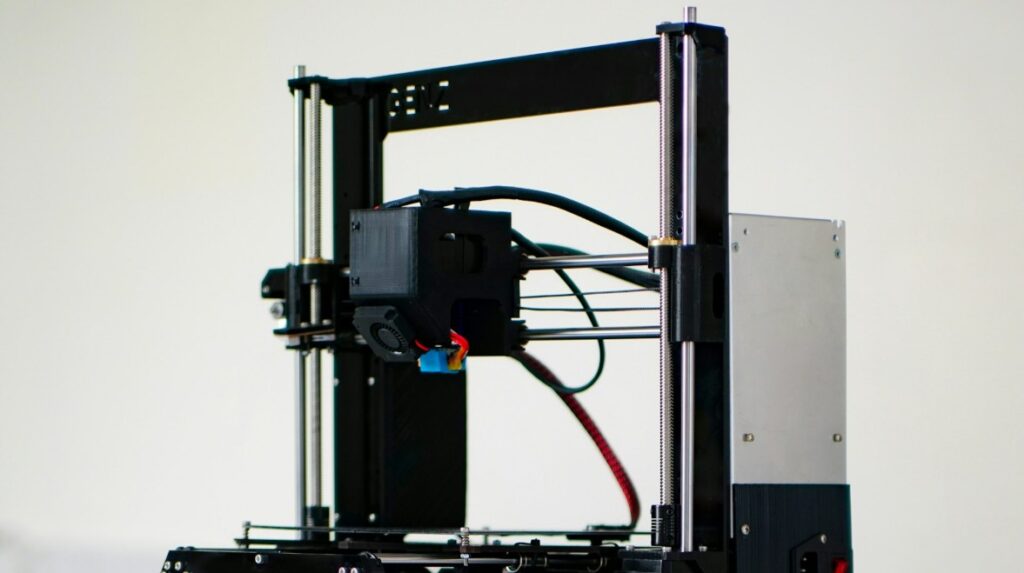
Academic architecture labs are pioneering digital fabrication — from 3D printing concrete to building with robots. These explorations are redefining how structures are conceived and made.
ETH Zurich’s Block Research Group, for instance, develops structural geometries that minimize material while maximizing strength, creating carbon-efficient vaults and domes through computational optimization.
ETHZ: Block Research GroupHarvard GSD: MAPS Group
Social and Environmental Innovation

Many academic studios now focus on design’s social and ecological dimensions. Schools are experimenting with participatory housing models, climate-resilient urbanism, and regenerative design.
The Bartlett School of Architecture’s “Design for Performance and Interaction” program explores how responsive technologies can improve environmental efficiency and user experience simultaneously.
Bartlett: Design for PerformanceColumbia GSAPP: Climate School
Collaborations Between Academia and Industry

Increasingly, universities partner with architecture firms, NGOs, and technology companies to realize prototypes and test new ideas at full scale.
Carnegie Mellon University’s Computational Design Lab collaborates with Autodesk and NASA on projects that explore automated building assembly and AI-assisted design systems.
CMU: Computational Design LabTU Delft: A+BE / AET Group
The Educational Shift: From Critique to Creation

Academic studios today are evolving from critique-based teaching toward creation-based research. Students are no longer only evaluated on presentation but also on experimentation and evidence. Models, simulations, and data become as crucial as drawings.
“Architecture education is moving toward applied research, where design thinking produces measurable social and environmental outcomes.”
RIBA Journal: Research in Education
The Future of Academic Innovation

Looking ahead, the most influential architectural ideas may emerge from universities rather than corporate offices. Academic studios are uniquely positioned to tackle frontier topics — carbon sequestration, AI-assisted urbanism, autonomous construction, and human-machine collaboration.
Open-source sharing, digital labs, and the ability to collaborate across disciplines are all accelerating the transfer from education to industry as well. An experiment-oriented approach at universities guarantees that architecture remains an organic living process that celebrates creativity, fuels inquiry, and serves the greater good.
Conclusion
From the robotics workshops of MIT to the structural experiments at ETH Zurich and the interactive design programs at The Bartlett, academic architecture studios redesign what was thought to be innovative. They remind us that the future of architecture is not invented in isolation but grown through research, teaching, and curiosity.
As the boundaries between education and practice dissolve, universities will remain the profession’s most fertile testing ground — where experimentation becomes built reality, and tomorrow’s architects learn by inventing the future today.
No responses yet