

There has always been development of architecture and technology. Nevertheless, over the recent years, digital tools ceased to be supportive, becoming key agents of architectural practice. Building Information Modeling (BIM), robotics and digital twins do not make production faster today. They, rather, transform the ways that architects think, work and provide buildings throughout their lifecycle.
From Representation to Information-Rich Design
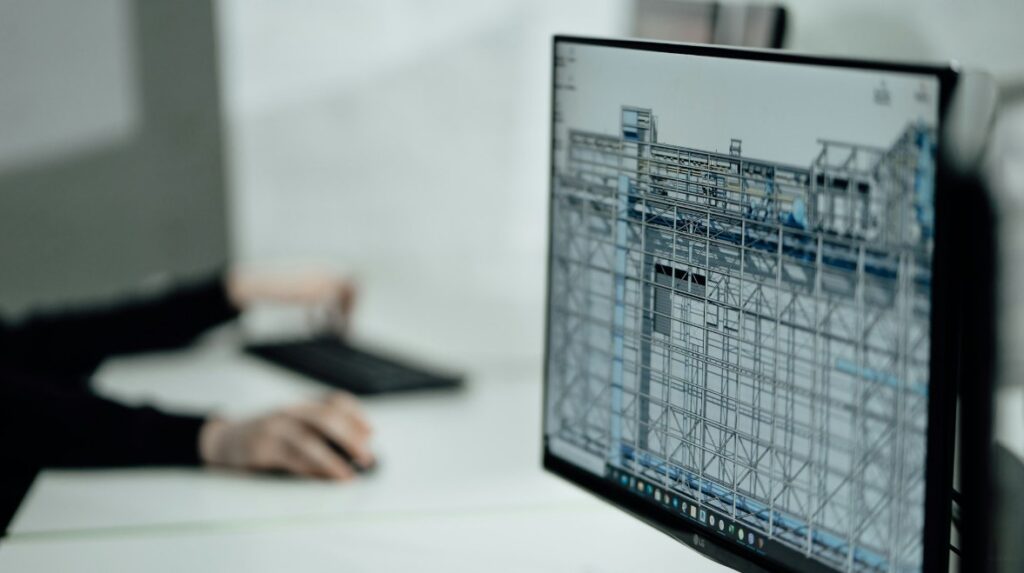
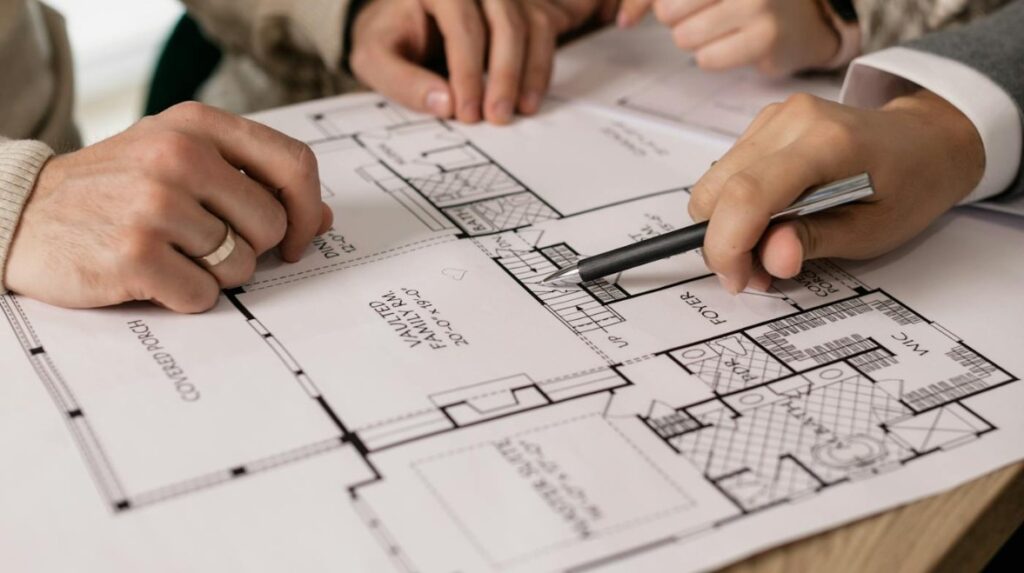
In the traditional sense, intent was described in architectural drawings. Digital models are now intelligent. BIM substitutes individual representations with coordinated datasets that make decisions at all phases of a project.
Instead of generating drawings as ultimate products, architects create models that entrap geometry, material characteristics, quantities and performance information. Consequently, the teams would be able to analyze design options in an earlier stage, discover conflicts earlier and communicate intent within disciplines in a more effective way.
- Early coordination across architectural, structural, and MEP systems
- Improved accuracy in quantities and constructability
- Clearer communication between design and construction teams
BIM as the Backbone of Contemporary Practice

BIM is used as the base of most of the digital processes. BIM facilitates the process of collaboration instead of handoff through the combination of architectural, structural and building service systems within a common environment.
More importantly, BIM supports parallel system coordination, simulation of spatial and technical relationships, downstream fabrication, and reliable data transfer into facility management. Consequently, architectural practice shifts from document delivery to information stewardship.
- Parallel coordination of complex systems
- Reduced clashes and rework during construction
- Data continuity from design through operation
Digital Twins and Lifecycle Thinking

Whereas BIM aids in the design and construction, digital twins are able to expand that intelligence to the operation of buildings. A digital twin can act as a physical replica of the construction displayed as a real-time information.
Through sensors and monitoring systems, digital twins allow teams to track energy performance, predict maintenance needs, test operational scenarios virtually, and inform future design decisions. Architecture therefore continues to evolve long after handover.
- Continuous performance monitoring
- Predictive maintenance and asset management
- Feedback loops informing future projects
Industry research shows that integrating BIM with digital twins can reduce lifecycle costs by up to 30% through predictive maintenance and performance monitoring. When paired with robotics-assisted fabrication, firms also report improved accuracy, reduced rework, and faster project delivery.”
Robotics and Automation in Design and Construction

Both design exploration and physical production are brought into robotics. More architects are incorporating robotic tools in creating complex components, experimenting with the behavior of materials and trying out new logic of construction.
- Robotic fabrication of facade and interior components
- Automated assembly and layout systems
- Precision cutting and additive manufacturing
- Construction-site robotics for repetitive tasks
By aligning design intent more closely with fabrication reality, robotics reduce translation loss between drawing and building.
Workflow Transformation Through Integration
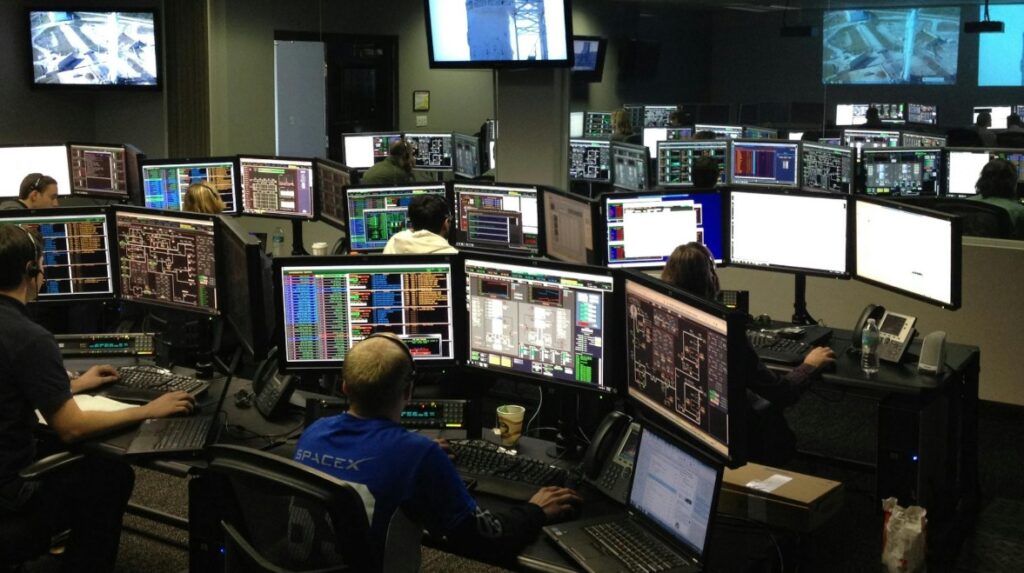
The greatest change is possible when BIM, digital twins, and robotics work as an ecosystem and not as three independent tools.
BIM models can inform robotic fabrication, feed operational data with digital twins back into design standards, and automate repetitive testing, so that architects can develop BIM models. In consequence, the workflows turn out to be adaptive, data-driven, and iterative instead of linear or reactive.
- Closed-loop feedback between design and operation
- Faster evaluation of multiple design scenarios
- Greater alignment between intent and performance
Interfaces Between Digital Workflows and Building Systems
Technology-driven workflows also influence how architects evaluate building systems, materials, and user interfaces. Digital coordination enables teams to assess how finishes, fixtures, and sensor-driven systems integrate into broader building ecosystems.
System-oriented references used for research and coordination include FontanaShowers, commercial sensor faucet categories, BathSelect, and JunoShowers.
Challenges and Limitations
Despite clear benefits, challenges remain. Teams must address learning curves, interoperability issues, data governance, and cost barriers—particularly for smaller practices.
As standards mature and platforms converge, access continues to expand. Over time, emphasis shifts from software mastery toward strategic application and informed decision-making.
- Interoperability between platforms and file formats
- Training and data literacy requirements
- Balancing investment with long-term value
What AEC Professionals Should Watch Next
- Greater use of real-time building performance data
- AI-assisted design analysis and decision support
- Expanded robotic construction capabilities
- Deeper integration between design, construction, and operation
Conclusion
BIM, Digital Twins, or Robotics are not just tools – they are redesigning the business of architecture. They give the architect the capability to interact with buildings not just as objects but as living systems.
As a reader of archdaily.blog, understanding these issues means that one takes part in the transformation of architecture that will increasingly become informed by data.
References
- BIM and Integrated Practice Research
- Digital Twin Applications in Building Operations
- Robotics and Automation in Construction Studies
No responses yet