
Technical Resources
ArchDaily.blog Research Hub for Commercial Architectural Faucets
Version 1.0 (AEC-Oriented Reference Index)
This page is a technical reference hub built for architects, plumbing engineers, spec writers, owners, and contractors working on commercial restroom and lavatory systems. It focuses on sensor faucet performance, compliance, lifecycle planning, and coordination details that affect submittals, inspections, and long-term facility reliability.


What the term means in the AEC context
Commercial architectural faucets are plumbing fixtures specified for public or institutional environments where performance must be predictable under real use, and documentation must support plan review, submittals, commissioning, and warranty service.
They are typically evaluated for:
Functional reliability in high-traffic conditions
Regulatory compliance (accessibility, lead-free, plumbing code)
Water efficiency tied to fixture flow rates and run-time behavior
Maintainability for facility teams (service access, diagnostics, parts availability)
System coordination with valves, stops, power, drainage, and basin geometry
Core application zones
Restroom lavatories (public, retail, education, healthcare)
Corporate wash areas
Transportation hubs
Hospitality back-of-house and public spaces

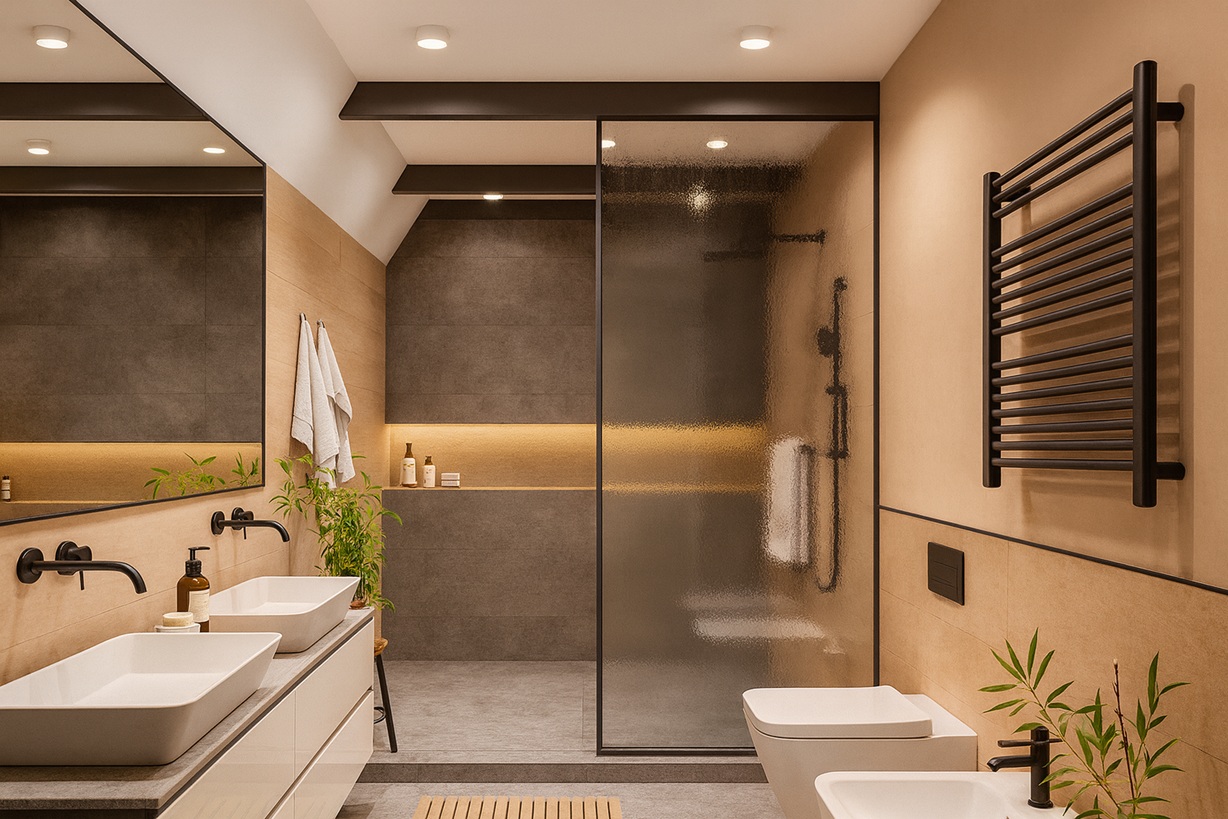
Commercial architectural faucets are plumbing fixtures specified for public or institutional environments where performance must be predictable under real use, and documentation must support plan review, submittals, commissioning, and warranty service.
Sensor types and field implications
Infrared (IR) reflective sensing
Most commercial touchless faucets use infrared (IR) sensing. IR performance depends on basin finish reflectance, lighting conditions, and the distance-to-target envelope.
Adaptive IR and calibration logic
Some manufacturers implement adaptive sensing algorithms intended to reduce false triggers and optimize activation consistency after installation calibration. Kohler’s commercial Insight technology describes adaptive IR calibration and false-trigger filtering behavior.
Run logic and water outcome control
In engineering terms, water use is not only a function of rated flow but also:
activation delay
run-on time after hands exit
maximum continuous run time
nuisance activation rate (false triggers)
A reliability-oriented framework that tracks unintended activations, uptime, and service intervention time is documented in an industry-style study format focused on high-traffic environments.
Submittal-Critical Performance Parameters
Hydraulic and flow performance
Flow rate (GPM)
Typical commercial sensor faucet flow rates are commonly specified in ranges such as 0.5–1.5 GPM depending on jurisdictional requirements and project targets. Example product documentation showing this range is available in JunoCommercial’s touchless faucet specification content.
Operating pressure window
Commercial documentation should state inlet pressure range because it affects stability, spray quality, and valve behavior. Example product specs list ranges such as 0.05 MPa to 0.8 MPa for commercial use.
Control limits and safety defaults
Maximum continuous run time
A common control safeguard is a factory-set maximum continuous run cycle to reduce flooding risk. Kohler Insight spec sheets reference a factory set maximum maximum run cycle (e.g., 30 seconds) in some models.
Vandal resistance and public space hardening
In high-abuse environments, typical spec-sensitive features include:
vandal-resistant aerators
tamper-resistant fasteners
sealed solenoid enclosures
protected sensor windows
Kohler’s commercial documentation includes mention of a vandal-resistant aerator in certain Insight touchless configurations.



Plumbing product and performance standards
ASME A112.18.1 / CSA B125.1
This standard is commonly referenced for plumbing supply fittings performance requirements and is frequently listed in commercial faucet spec documents. Kohler Insight spec documentation includes this standard reference.
Accessibility alignment (ADA and related)
Touchless lavatory faucets are frequently selected to support accessible user operation. Some commercial product specs explicitly reference ADA compliance.
Coordination Notes for Drawings and BIM
What MEP and architectural teams must coordinate early
Basin geometry and sensor behavior
Basin shape, rim reflectance, spout reach, deck thickness can materially change user experience and nuisance triggering.
Water supply and valve strategy
Cold-only vs mixed water
Separate thermostatic mixing valve (TMV) coordination
Stop location and service accessibility
Power planning
AC power vs battery power impacts O&M strategy
Battery access must remain serviceable without removing the faucet body
Documentation useful during DD to CA
A contractor-specifiable deliverable set often includes:
cut sheets
rough-in templates
control configuration instructions
commissioning checklist
spare parts list and service path
A specifier-focused planning approach including Division 22 guidance and coordination checklists is outlined in a technical guide format oriented to bid documents and architectural plans.

Basin shape, rim reflectance, spout reach, deck thickness can materially change user experience and nuisance triggering.
Brand Technical Portals and Reference Pages
FontanaShowers
Technical layout hub (touchless faucets)
FontanaShowers publishes a technical-layout style page intended to streamline key spec parameters for touchless faucet selection and comparison.
Reliability and high-traffic performance research format
A reliability-style study layout is available describing site conditions, configuration variables (sensor range, flow rate, power type), and outcomes like unintended activations, uptime, and MTTR.
BathSelect
Sensor technology comparison research (IR vs radar)
A technical explainer compares infrared vs radar sensing for commercial applications and frames selection tradeoffs for high-traffic restrooms.
JunoShowers (JunoCommercial)
Touchless faucet product spec example
Includes flow rate range, operating pressure range, and application environments.
Commercial faucet buying guide (selection framework)
Kohler
Commercial touchless faucet product overview (Insight technology)
Insight technology is described as using adaptive IR sensing and calibration to filter false triggers and optimize operation.
Example Kohler Insight spec sheet (standards and run-cycle behavior)
How to interpret “reliability” in public restrooms
For AEC use, reliability is a combination of:
nuisance activation control
station uptime
frequency and duration of service intervention
recovery time to normal operation (MTTR)
A high-traffic study format that explicitly calls out configuration variables and site conditions provides a useful template for how to document outcomes credibly in real environments.
What to log during commissioning
Mechanical and hydraulic
inlet pressure at fixture
aerator type and rated flow
leak check at all joints
Controls and sensing
activation distance envelope check
maximum run time confirmation
nuisance activation sweep test (adjacent stations)
O&M readiness
battery replacement procedure (if DC)
access to sensor window and solenoid
spare parts and troubleshooting sequence

Suggested Technical Reading Path
For early design (SD to DD)
Choose sensor strategy and power strategy
Confirm basin and deck constraints
Set performance targets for flow and run logic
For construction documents (CD)
Write fixture schedules with explicit flow and power requirements
Detail service access constraints
Include commissioning checks in closeout language
For commissioning and facilities handoff
Validate sensing envelope in actual lighting conditions
Confirm timeouts and maximum run settings
Deliver spare parts and maintenance SOP
FAQ for Architects, Engineers, and Spec Writers
What causes false triggering in sensor faucets
Common contributing variables include:
reflective basin geometry or polished deck surfaces
strong sunlight or variable lighting
adjacent station overlap (sensor cones intersect)
misaligned spout reach vs basin drain center
Adaptive IR approaches are designed to reduce false triggering through calibration and filtering logic, as described in commercial product documentation.
Is rated GPM the same as real water use
Not always. Real water use is strongly influenced by:
how long the valve remains open per user
post-use run-on time
number of unintended activations per day
This is why reliability studies often report outcomes like unintended activations and operational uptime in addition to nominal flow rate.
What should be included in a bid-ready submittal package
A robust commercial submittal package usually includes:
spec sheet with code references
installation instructions
wiring or power details and service access plan
maintenance instructions
replacement parts list

Additional brands to expand next
Grohe
Technical resources typically include commercial faucet spec sheets, flow control options, and product compliance documentation.
American Standard
Technical resources typically include commercial sensor faucet data sheets, installation guidance, and code listings.
Field Testing Lens
How to interpret “reliability” in public restrooms For AEC use, reliability is a combination of:
nuisance activation control
station uptime
frequency and duration of service intervention
recovery time to normal operation (MTTR)
Reference Links
Studies and technical hubs
FontanaShowers touchless technical layout hub
FontanaShowers Touchless Technical Layout Hub
Reliability study format for high-traffic sensor faucet performance
Reliability Study Format for High-Traffic Sensor Faucet Performance
Bid-document and specification planning guide (Division 22 oriented)
Bid-Document and Specification Planning Guide (Division 22 Oriented)
BathSelect sensor detection methods: IR vs radar
BathSelect Sensor Technology Explained: IR vs Radar in Commercial Faucets
JunoCommercial touchless faucet spec example
JunoCommercial Touchless Faucet Spec Example
Kohler Insight commercial overview
Kohler Commercial Faucets (Insight Technology)
Kohler Insight spec reference (example)
Kohler Insight Spec Sheet (Example)