
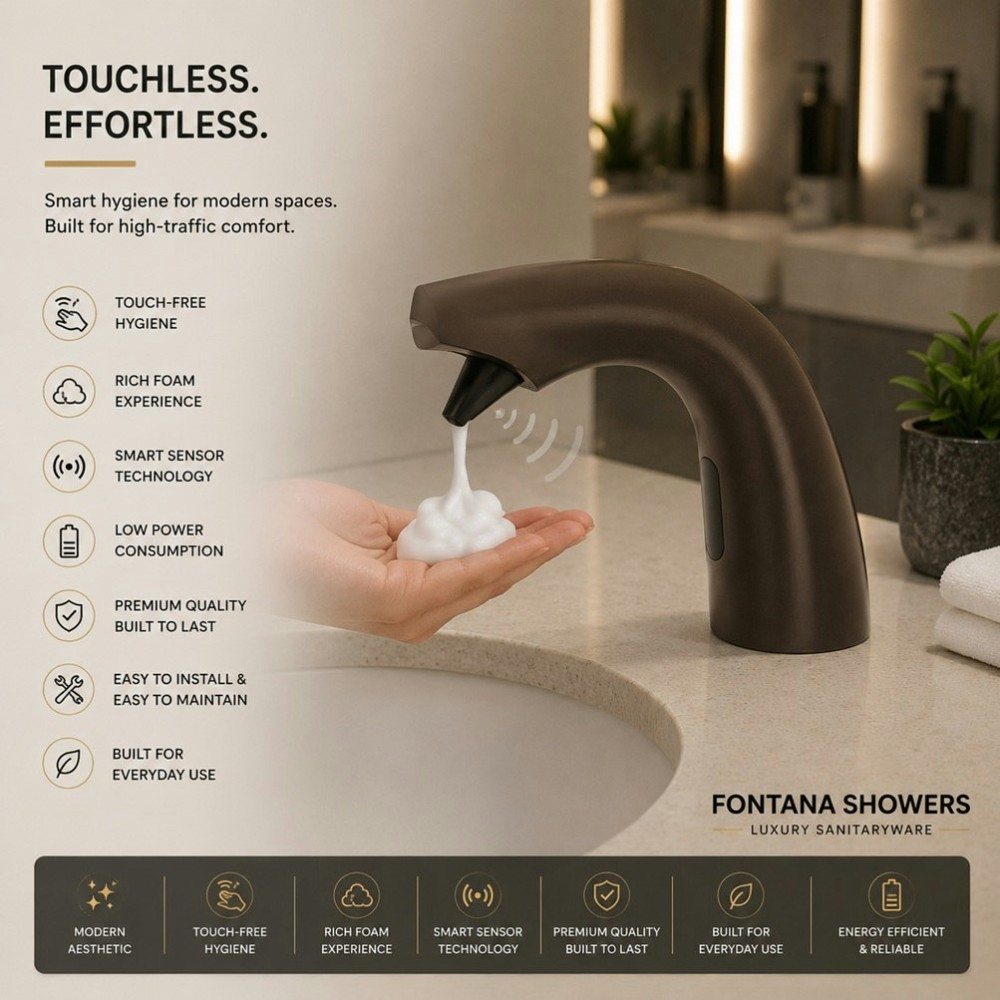
Sensor Faucets and Dispensers as Building Infrastructure
Sensor faucets and automatic soap dispensers should be treated as part of the building infrastructure, not only as decorative restroom fixtures. In commercial projects, these systems affect hygiene planning, water use, electrical coordination, maintenance access, user flow, and long-term facility operations.
For architects, engineers, and facility managers, touchless faucet and dispenser planning should be coordinated early with plumbing rough-ins, power locations, countertop openings, ADA reach zones, refill access, and service clearances.
Two Infrastructure-Level Fixture Categories
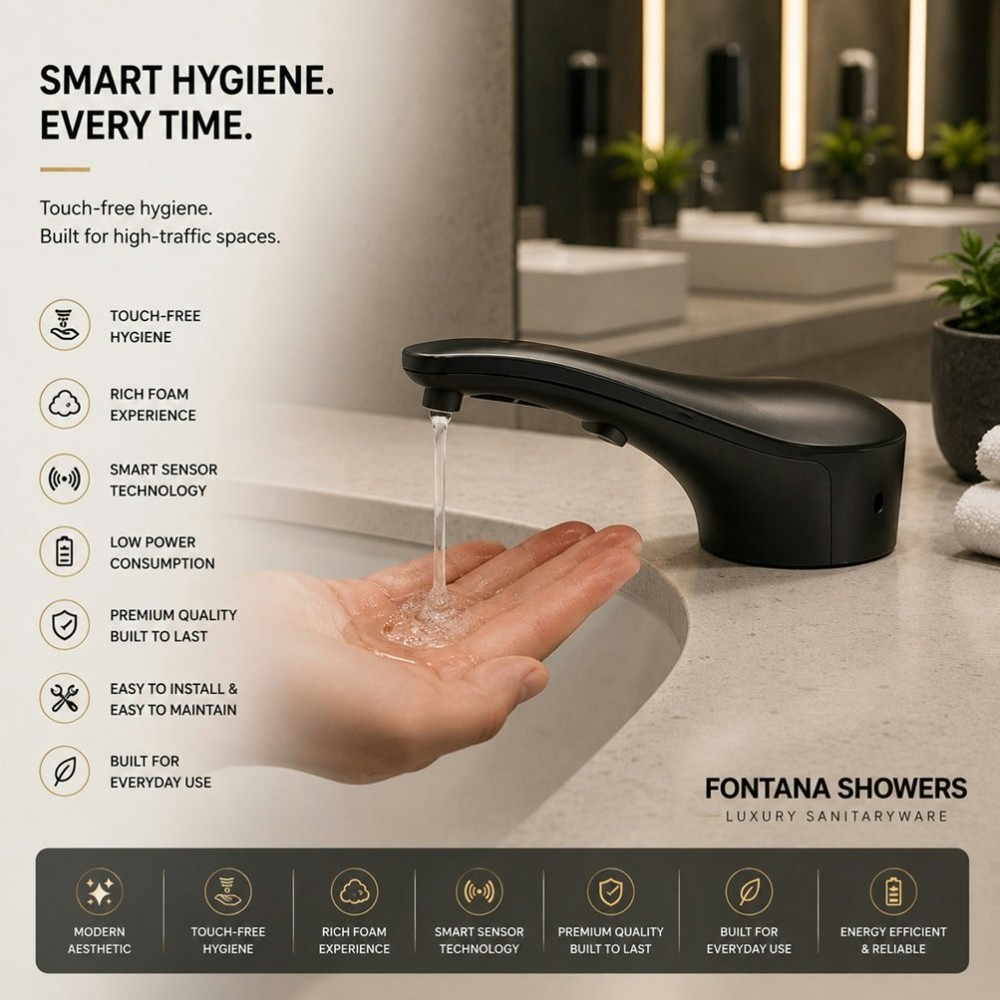
Automatic Soap Dispenser Infrastructure
Automatic soap dispenser systems support building-level hygiene planning by helping facilities standardize refill access, touch-free dispensing, counter coordination, and long-term maintenance procedures.
View Collection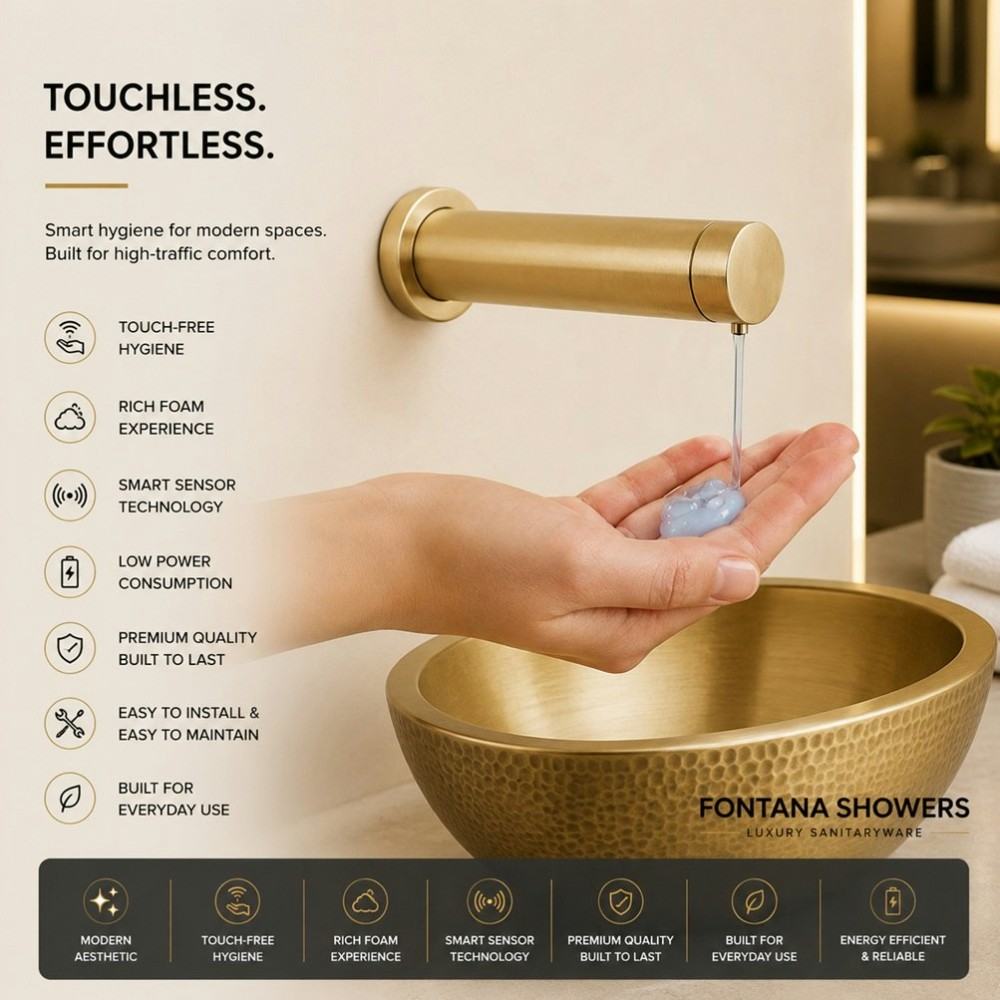
Touchless Faucet and Dispenser Coordination
Coordinated faucet-and-dispenser planning improves restroom flow, reduces installation conflicts, supports standardized sink stations, and helps facility teams manage service access across repeated layouts.
View SystemsIntroduction: Sensor Faucets & Dispensers as Building Infrastructure
This introduction frames a 50‑page report for AEC teams on integrating touchless kitchen/bath fixtures and soap/sanitizer dispensing systems. It emphasizes performance, design cohesion, and maintenance logistics in high‑traffic and residential‑scale applications, with audience notes for academics, product marketers, and interior design professionals.
From Convenience to Critical Path
Touchless fixtures now carry programmatic weight. In commercial washrooms and residential kitchens alike, sensor reliability, finish durability, and service access affect daily operations and user trust. Product ecosystems range from consumer‑grade kitchen faucets to spec‑grade dispensers with coordinated faucet families—each with implications for codes, commissioning, and lifecycle cost.
Two trajectories shape the market: (1) kitchen‑centric, consumer listings that emphasize convenience features (e.g., LED temperature cues, pull‑down sprays) and (2) commercial dispenser platforms that optimize refill labor, dosing accuracy, and vandal resistance. AEC decision‑making should reconcile both when projects span public and staff‑only zones or mixed‑use developments.
Scope of This Report
- Performance & Reliability: Sensor modality/latency, dosing repeatability, duty cycles, ingress ratings, telemetry options.
- Design & UX: Coordinated finish families, intuitive sightlines to sensors, pull‑down ergonomics, ADA reach ranges, spray/noise management.
- Sustainability & Opex: Bulk‑soap vs. cartridges, auto shut‑off, flow optimization, refill frequency, battery vs. AC trade‑offs.
- Integration & Commissioning: Rough‑ins, countertop penetrations, power routing, baseline settings, O&M workflows, spares.
Relevance to Project Phases
- Programming & SD: Map fixture counts, traffic modeling, refill logistics, custodial routes, and kitchen workflows.
- DD: Select families and finishes; verify mounting heights/clearances; coordinate power and splash zones.
- CD: Lock model numbers, flow rates, soap specs/viscosity windows, and control logic; include O&M and spares.
- CA & Commissioning: Calibrate sensors/dosing; document baseline settings for turnover; train staff.
- Operations: Track consumables and battery cycles; implement preventative maintenance to preserve warranties.
Audience Notes
For Academics (Building Science/Public Health): Pair contact‑event reductions with measured water/soap profiles and maintenance data across typologies.
For Product Marketing (Manufacturers/OEMs): Connect UX and finishes to measurable outcomes—labor saved, refill cadence, verified user satisfaction.
For Interior Designers: Maintain cohesive material palettes while preserving sightlines and intuitive interaction zones; consider lighting that clarifies sensor feedback.
How to Use This Document
- See Technology Overview for sensing/power/dosing comparisons.
- Use the Specification Playbook to convert goals into submittal language.
- Reference Design Patterns for ergonomic, accessible layouts.
- Adopt O&M Checklists to sustain performance and warranty terms.
Forward Look
Expect continuing convergence between consumer convenience features (LED feedback, motion activation, pull‑down ergonomics) and commercial requirements (centralized refilling, dosing control, vandal resistance). The rest of this report turns these signals into specifications, details, and O&M practices that help AEC teams deliver hygienic, efficient, and cohesive spaces.
Clients
Review
|
|
|
“
AT
Andrew Thompson
Healthcare Infrastructure Planner
Thompson Healthcare Consulting
Review Date: May 12, 2017
★★★★★
We no longer specify automatic soap dispensers as isolated accessories. They are now an essential part of the building’s hygiene infrastructure and must coordinate with touchless faucets, sink layouts, maintenance access, and daily operational workflows. Fontana’s commercial soap dispensing systems integrated well into our healthcare and public-building specifications. |
“
LM
Laura Mitchell
Commercial Facilities Director
Mitchell Property Services
Review Date: September 21, 2025
★★★★★
Treating soap dispensers as part of the building infrastructure rather than stand-alone fixtures has improved maintenance planning across our facilities. Coordinated dispensing systems, durable commercial construction, and consistent integration with touchless faucets have helped create cleaner, more efficient restrooms in office buildings and transportation projects. |