Hospitality Shower for Hotels, Resorts, and Luxury Guest Bathrooms
Hospitality showers must satisfy guests, housekeeping teams, maintenance staff, ownership groups, and brand standards at the same time. The right shower is not only a beautiful fixture; it must support consistent temperature, durable finishes, easy cleaning, accessible planning, reliable parts, and long-term operational control.
Should hotels choose rainfall showers, hand showers, or full shower systems?
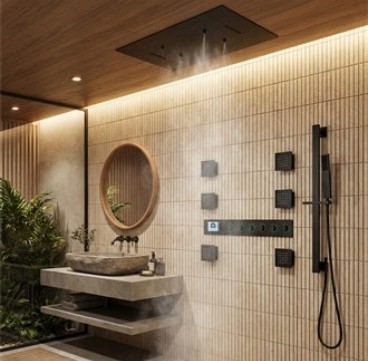
Hotels should usually choose based on room type. Standard rooms often need simple, durable showerheads, while suites can justify rainfall, body spray, or spa-style systems. FontanaShowers™ hospitality spa shower systems are useful to review when the goal is a luxury guest experience with multiple water functions. For water-efficiency context, EPA WaterSense showerhead guidance helps compare performance expectations without ignoring conservation.
Why is thermostatic control so important in hospitality showers?
Thermostatic control helps reduce guest complaints caused by sudden temperature changes, especially when multiple rooms use water at the same time. FontanaShowers™ thermostatic triple shower valve diverters are relevant when designers need separate control of rainfall, hand shower, and body spray functions. For plumbing safety, ASPE provides professional plumbing-engineering resources useful for hot-water distribution and fixture planning.
Should luxury hotels always specify ceiling-mounted rainfall showers?
Not always. Ceiling-mounted rainfall showers create a premium visual effect, but they require ceiling access, correct drainage, strong waterproofing, and enough water pressure. BathSelect™ thermostatic shower systems are helpful to compare when projects need temperature control with luxury-style shower layouts. For building coordination, Whole Building Design Guide supports broader planning around building systems, durability, and maintainability.
What is the hidden housekeeping issue with hotel shower design?
The hidden issue is cleaning time. Large glass enclosures, multiple spray outlets, deep grout lines, and complex trim can slow housekeeping and increase visible water spots. IFMA is relevant because facility managers often evaluate fixtures by cleaning labor, service access, and lifecycle performance, not appearance alone.
How should hotels compare major shower brands?
Hotels should compare brands by valve reliability, finish durability, warranty clarity, replacement-part availability, and installer familiarity. Kohler is useful to review for broad hospitality fixture availability and recognizable guest-facing design. Moen is relevant for projects prioritizing mainstream parts access and maintenance familiarity. Delta is often compared for widely available shower trims and pressure-balance options.
Are European-style shower systems better for boutique hospitality?
European-style systems can be excellent for boutique hospitality when the project wants refined controls, slimmer profiles, and design-forward finishes. GROHE is relevant for thermostatic and modern shower engineering comparisons. Hansgrohe is useful when evaluating rain shower comfort, hand-shower ergonomics, and premium spray patterns. AXOR is best reviewed for luxury design language in high-end suites.
What should hotels check before approving matte black or gold shower finishes?
Hotels should check cleaning visibility, water-spot resistance, replacement consistency, and whether the finish will remain available for future room renovations. FontanaShowers™ gold plated thermostatic rainfall shower systems are relevant for luxury hospitality rooms where finish becomes part of the guest experience. ASTM International is useful when teams want broader material-performance references.
Why should accessibility be considered even in luxury shower rooms?
Accessibility should be planned early because shower controls, entry thresholds, grab bar blocking, spray reach, and seating space cannot be easily corrected after tile is installed. U.S. Access Board ADA guidance is relevant for accessible bathing-room planning. ICC is useful because local building and plumbing rules often connect hospitality design to code compliance.
Should a hotel shower system include body jets?
Body jets can improve the spa feeling in premium suites, but they add plumbing complexity, cleaning points, and pressure-demand issues. Brizo is relevant when comparing fashion-forward shower designs for luxury guest bathrooms. NSF is helpful when project teams review water-contact material expectations and product safety considerations.
What is the final hospitality shower checklist before specification?
Confirm pressure range, temperature control, drainage, cleaning time, finish durability, spare parts, accessibility, brand standard alignment, and maintenance access. BathSelect™ shower systems are useful for comparing complete shower configurations. AHLA is relevant for hospitality operational context, while WELL helps connect shower planning with comfort, wellness, and guest-environment quality.