
“`
Stadium • Arena • Airport • Convention Center Restroom Engineering
Why Mega-Venue Restrooms Fail at Peak Demand — And How Architects Design for Faster Throughput
The hardest restroom problem in a stadium, airport terminal, arena or convention center
is rarely ordinary daily traffic. It is the moment when thousands of people decide to
use the facilities at almost exactly the same time.
“`
“`
The 10-Minute Restroom Problem
Halftime, concert intermissions, boarding waves and scheduled convention breaks can
transform a quiet restroom bank into one of the most heavily loaded systems in a
building. Thousands of visitors may arrive within minutes. A layout that performs well
during average occupancy can suddenly develop entrance congestion, stall queues,
overloaded wash stations and slow exits.
That changes how architects, plumbing engineers and facility teams should think about
the restroom. In a mega-venue, it is not simply an interior amenity. It becomes part of
the building’s people-moving infrastructure.
fixtures. It is the one that can repeatedly survive the peak attendance wave.
“`
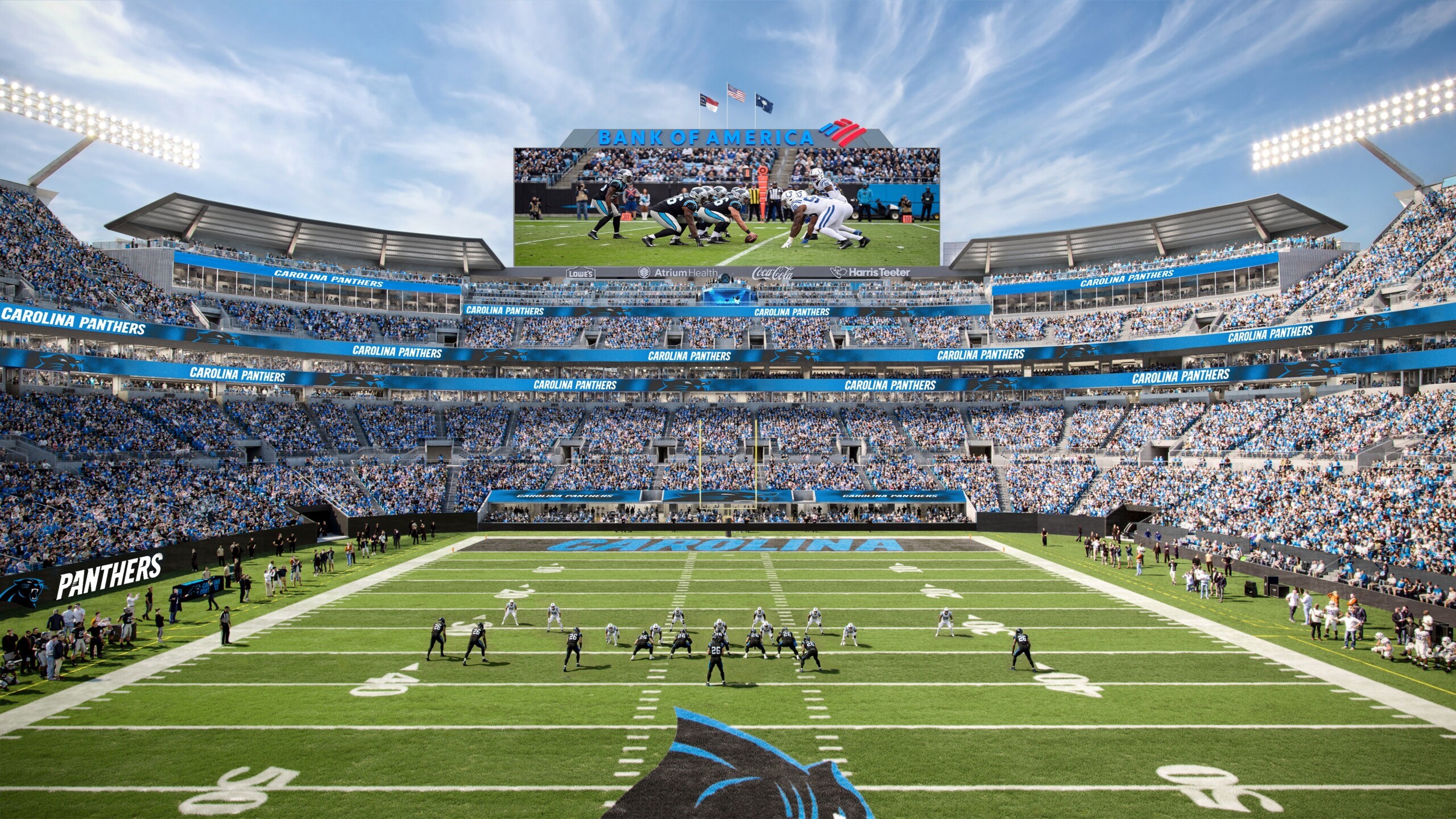
Rendering source: HOK.
“`
Where Restroom Throughput Actually Breaks Down
Entrance & Circulation Bottlenecks
Fixture quantity alone does not solve queuing. Narrow entrances, conflicting
circulation paths and poorly positioned sinks can slow the entire user sequence.
Wash-Station Delay
Inconsistent sensors, excessive splash, slow soap delivery or awkward faucet
positioning add seconds to each interaction. At scale, those seconds become queues.
Simultaneous Plumbing Demand
Dozens of faucets and flush valves may activate together. Inadequate infrastructure
can create pressure drops, inconsistent flow and temperature instability.
Service Interruptions
Empty soap reservoirs, depleted batteries, clogged aerators or inaccessible
solenoids can remove fixtures from service exactly when maximum capacity is needed.
“`
“`
Design the Entire User Journey, Not Just the Fixture Count
High-throughput restroom planning works best when the complete sequence is treated as
one system. Every unnecessary pause increases dwell time and reduces effective capacity.
Clear sightlines and circulation reduce doorway congestion.
Fixture mix should reflect real dwell times and accessibility requirements.
Faucet, basin and soap placement should create a simple repeatable interaction.
Drying and outbound circulation should not conflict with incoming traffic.
“`
“`
Why Touchless Performance Matters More at Venue Scale
Automatic faucets and soap dispensers can simplify the handwashing sequence and reduce
unnecessary contact with shared controls. But the specification must be commercial in
more than name. A sensor faucet that behaves acceptably under light use may become an
operational liability when hundreds of consecutive users approach it.
Large-venue teams therefore need to evaluate response consistency, false activation,
power source, valve access, aerator configuration, cleaning exposure and replacement
strategy alongside appearance.
| Design Variable | Peak-Demand Question |
|---|---|
| Sensor | Will activation remain fast and repeatable during continuous use? |
| Power | Is battery, AC or AC/DC architecture practical across hundreds of fixtures? |
| Soap | Can capacity survive the event without constant staff refilling? |
| Service | Can technicians access electronics, valves and consumables without closing a bank? |
| Standardization | Can common components simplify spare-parts inventory and maintenance? |
“`
“`
Where Commercial Faucet Brands Fit Into the Specification
Brand selection should come after the operating requirements are understood. Stadiums,
airports and convention facilities differ in electrical infrastructure, maintenance
staffing, basin design, fixture quantity, water-efficiency goals and procurement
standards, so no single manufacturer is automatically the right answer for every project.
Particularly relevant when teams are evaluating a coordinated large-venue strategy
involving commercial sensor faucets, multiple power approaches and automatic
soap-dispensing systems rather than an isolated faucet selection.
An established institutional platform worth evaluating where above-deck servicing,
protected electronics and vandal-resistant commercial architecture are priorities.
Offers commercial electronic faucet configurations that can be considered for
high-use environments requiring infrared activation and configurable controls.
Provides commercial touchless configurations that may suit projects balancing
electronic faucet performance with architectural and finish coordination.
compare current model-level technical documentation rather than selecting solely by
brand reputation. Power architecture, sensing, flow rate, service access, accessibility,
component protection and replacement-parts support matter more at venue scale.
“`

events with very different traffic patterns.
“`
The Hidden Throughput Problem: Maintenance
A 40-station wash area effectively becomes a 34-station wash area when several faucets
or dispensers are unavailable. That is why serviceability has a direct relationship to
capacity.
Battery replacement, soap refill, sensor adjustment, aerator cleaning and solenoid
service should be planned before installation. The larger the facility, the greater the
advantage of standardizing components across restroom banks and reducing the number of
different service platforms technicians must support.
- Accessible valves and electronic components
- High-capacity or centralized soap strategies
- Commercial-grade fixture construction
- Standardized replacement components
- Rapid-cleaning countertop and basin design
- AC or AC/DC planning where appropriate
- Water-control strategy at simultaneous demand
- Accessible fixture placement integrated from concept design
“`
“`
What Architects and MEP Engineers Should Specify
Fixture schedules for mega-venues should be developed around actual event operations.
Architects, plumbing consultants, engineers, contractors, procurement teams and facility
managers should review sensor range, repetitive-use behavior, flow requirements, mixing
strategy, ADA requirements, vandal resistance, power distribution, service access,
soap coordination and long-term parts availability.
Women’s restroom capacity also deserves specific throughput analysis. Nominally similar
fixture counts do not necessarily produce similar queue times because stall count,
circulation and real user dwell time are different.
The objective is not simply to maximize the number of fixtures. It is to create a
balanced restroom system in which circulation, plumbing, fixtures, maintenance
and operations all support the same peak-load target.
“`
“`
Large-Venue Restroom & Touchless System Resources
Fontana Touchless — Stadium Applications
High-Performance Stadium Operations
Stadium & Large-Venue Touchless Portfolio
Large-Venue Facility Selection Guide
“`
“`
Large-Venue Restroom Planning FAQ
Why do stadium restroom queues appear so suddenly?
Demand is compressed into short intervals such as halftime and intermissions.
Fixture count, entrance geometry and user dwell time therefore matter more than
average daily restroom traffic.
Can touchless faucets improve restroom throughput?
They can simplify the wash interaction, but only when sensing is reliable and faucet,
basin, soap and circulation design work together.
Why is power architecture important?
Maintaining batteries across hundreds of electronic fixtures can create significant
labor. Large projects should evaluate battery, AC and AC/DC approaches during design.
Why does fixture standardization matter?
A common platform can reduce spare-parts complexity, technician training requirements
and service time across a large restroom network.
Is adding more fixtures enough?
No. Poor circulation, low water pressure, slow washing, empty soap and out-of-service
fixtures can still restrict throughput even when fixture counts are generous.
What is the core design objective?
Keep the restroom operational through the largest realistic attendance surge while
maintaining acceptable queues, reliable plumbing and manageable lifecycle service.
“`