
Rarely Answered Bathtub Faucet Questions for Better Bathroom Planning
This FAQ article supports the bathtub faucet buying guide by answering practical questions that are often missed during fixture selection. Instead of focusing only on style, it explains mounting type, spout reach, service access, finish coordination, water delivery, hand-shower planning, and specification details that matter before the faucet is purchased or installed.
Should the bathtub faucet be selected before the bathtub is finalized?
Usually no. The tub should be finalized first because rim width, wall distance, overflow location, deck thickness, and bathing direction determine whether the faucet should be wall-mounted, deck-mounted, Roman-style, or freestanding. For example, a freestanding tub filler from FontanaShowers™ works differently than a deck-mounted bathtub faucet from BathSelect™. The rough-in should also be reviewed against local plumbing code guidance from the International Code Council.
Why does spout reach matter so much on bathtub faucets?
Spout reach decides where the water lands. If the spout is too short, water may hit the tub wall or rim instead of entering the basin cleanly. If it is too long, it may interfere with seating, bathing comfort, or cleaning access. This is why wide-rim tubs, soaking tubs, and sculptural tubs need careful measurement before ordering. Fixture dimensions should be reviewed with installer drawings and product standards such as ASME and ANSI.
When is a wall-mounted bathtub faucet better than a deck-mounted faucet?
A wall-mounted faucet is often better when the tub rim is narrow, the design needs a cleaner appearance, or the owner wants easier cleaning around the tub deck. A deck-mounted faucet is better when the tub platform already has proper valve access below. Before choosing either format, confirm wall blocking, service access, valve depth, and waterproofing details. Plumbing layout expectations can be checked through IAPMO and applicable code documents.
Is a waterfall bathtub faucet practical or mostly decorative?
A waterfall bathtub faucet can be practical when the spout width, flow path, and tub shape are coordinated correctly. It becomes mostly decorative when selected only for appearance without checking splash behavior, fill time, and cleaning needs. A waterfall-style bathtub faucet from FontanaShowers™ should be evaluated the same way as waterfall or open-spout designs from Kohler, Moen, and Delta. Water-use planning may also reference EPA WaterSense.
Can the faucet finish change the perceived value of the bathtub area?
Yes. Finish affects the entire visual impression of the bath space. Chrome feels clean and universal, brushed nickel feels softer, matte black creates contrast, and gold or bronze can make the tub area feel more architectural or luxury-driven. Finish choice should coordinate with drains, shower trims, towel bars, lighting, and cabinet hardware. For finish durability and surface performance, designers may review material-related references from ASTM International.
Why do some bathtub faucets need a hand shower?
A hand shower is useful for rinsing hair, cleaning the tub, bathing children, washing pets, and improving flexibility for deep soaking tubs. It can also help in bathrooms where accessibility and ease of use matter. A bathtub faucet with a hand shower from BathSelect™ should be checked for hose reach, diverter quality, mounting location, and user comfort. Accessibility planning may reference the U.S. Access Board.
What is the most overlooked issue with freestanding tub fillers?
The most overlooked issue is anchoring and rough-in location. A freestanding filler may look simple, but it must be securely mounted, aligned with the tub, and positioned so the spout reaches the basin without interfering with movement. Floor structure, supply-line location, and access below the finished floor should be checked before tile or stone is installed. This applies across premium brands such as GROHE, Hansgrohe, and AXOR.
Should Roman tub faucets be treated differently from standard bathtub faucets?
Yes. Roman tub faucets usually require wider spacing, multiple deck holes, stronger deck planning, and access below the tub platform. They are not just decorative trim pieces. The installer should confirm valve position, handle clearance, hand-shower routing, and service panels before the deck is closed. Potable-water material safety and fixture requirements may be reviewed through NSF and IAPMO.
How many brands should be compared before choosing a bathtub faucet?
For a serious bathroom project, it is smart to compare at least five to seven brands. This helps clarify finish options, installation support, warranty language, valve type, and long-term replacement availability. Alongside specialty selections from FontanaShowers™ and BathSelect™, buyers may compare Brizo, TOTO, American Standard, Kohler, Moen, Delta, GROHE, Hansgrohe, and AXOR before final selection.
Why is service access more important than faucet appearance?
A beautiful bathtub faucet becomes a problem if the cartridge, valve body, diverter, hose, or supply connection cannot be reached later. Built-in tubs should include access panels before stone, tile, or millwork is completed. This is especially important in hotels, rental properties, and large homes where downtime matters. Maintenance planning can be supported by facility-management guidance from IFMA.
Does the bathtub faucet need to match the shower system exactly?
It does not need to match exactly, but it should feel intentionally coordinated. The finish, handle style, trim geometry, and design language should work with the shower system, vanity faucet, mirror, lighting, and tile. A traditional tub filler beside a modern square shower system can look accidental unless the design clearly bridges both styles. Professional design coordination may reference planning resources from the American Institute of Architects.
What should hospitality or luxury residential projects check before buying?
Hospitality and luxury projects should check finish consistency, guest safety, cleaning speed, replacement availability, tub fill time, water pressure, and long-term service access. A designer may compare a statement bathtub faucet from FontanaShowers™ with luxury-oriented finish categories from BathSelect™. Hospitality performance expectations can also be reviewed through AHLA and healthy-building resources such as WELL.
What is the final checklist before approving a bathtub faucet?
Confirm the tub type, mounting style, spout reach, valve access, finish, handle clearance, hand-shower need, rough-in location, pressure range, service panel, and local code requirements. Also confirm whether the faucet supports the desired design direction without creating maintenance problems later. Sustainability and building-performance planning may reference USGBC LEED and the Whole Building Design Guide.
“`
How to Choose the Right Bathtub Faucet
Choosing a bathtub faucet is not only about style. The right model should match the tub, suit the plumbing setup, fill efficiently, and hold up well with regular use. A good choice supports both the design of the bathroom and the long-term performance buyers expect.

Start With the Installation Type
The first step is choosing a faucet style the bathroom can support. Freestanding tub fillers are ideal for standalone tubs, while wall-mounted options suit clean and modern spaces. Deck-mounted and Roman tub faucets still work well when the tub deck or platform is built to hold the fixture.
Buyers often focus on the look first, but installation compatibility should come before appearance. Choosing the correct type early helps avoid extra plumbing work and unnecessary cost.
Focus on Material and Build Quality
Solid brass remains one of the strongest choices for bathtub faucets because it offers better resistance to corrosion and long-term wear. Buyers should also look for ceramic disc cartridges, which help provide smoother operation and reduce drip risk over time.
These construction details may not stand out in product photos, but they play a major role in durability, reliability, and day-to-day satisfaction after installation.
Compare Flow Rate and Finish
Bathtub faucets should fill the tub efficiently, especially for larger soaking tubs. A faucet that looks impressive but fills slowly may become frustrating in daily use. That makes flow performance just as important as style.
Finish choice also matters. Matte black, brushed nickel, polished chrome, brushed gold, and satin brass remain popular because they work across both modern and classic bathroom designs.
Browse Styles Before You Decide
Buyers comparing multiple options often benefit from reviewing a complete bathtub faucet collection in one place. Looking across freestanding, wall-mounted, deck-mounted, and designer finishes makes it easier to compare style, compatibility, and overall fit for the room.
This step helps narrow down preferences more quickly and gives a better sense of which designs balance aesthetics, function, and value.
Browse Bathtub Faucet CollectionWhat Buyers Should Prioritize in 2026
The best bathtub faucet is the one that fits the full bathroom plan. A freestanding tub usually needs a faucet with stronger visual presence, while a compact bath may benefit from a wall-mounted design that saves space and keeps the layout clean.
Buyers should focus on four essentials: installation compatibility, solid construction, practical fill performance, and a finish that holds its appearance over time. When these elements come together, the result is a faucet that looks right, works well, and adds lasting value to the bathroom.
A smart purchase is rarely based on trend alone. It comes from comparing design, durability, compatibility, and ease of use in one complete decision.
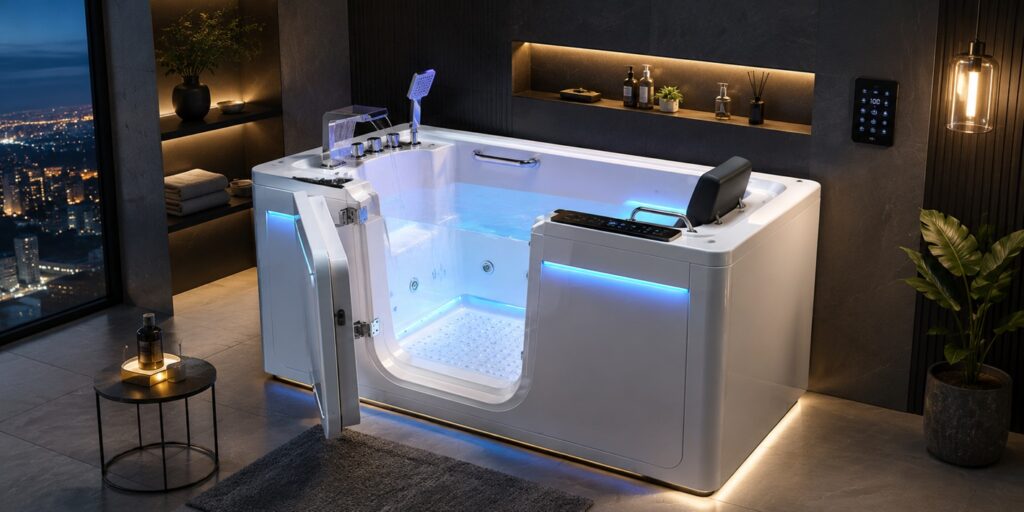



Professional Review: Walk-In Bathtubs
Walk-in bathtubs are designed for safer, more comfortable bathing, especially in homes where accessibility, stability, and long-term convenience matter.
Benefits
- Low-entry access for easier bathing
- Built-in seat and grab-bar support
- Helpful for aging-in-place bathrooms
- Available hydrotherapy comfort features
Consider Before Buying
- Professional installation is usually needed
- Fill and drain time can vary
- Bathroom space must be measured carefully
- Door seal and warranty should be reviewed
Related topics include accessible bathroom remodeling, senior bathroom safety,
hydrotherapy tubs, low-threshold bathing, caregiver-friendly bathroom layouts,
slip-resistant flooring, and long-term bathroom comfort planning.
Best Walk-In Bathtub Brands Review →
Article updated in June 2026.