
Automatic Soap Dispensers & Touchless Handwashing Systems
A compact engineering review of automatic commercial soap dispensing, covering sensing, reservoir capacity, power, maintenance access and integration with touchless faucet systems.
Review Methodology
Evaluation focuses on manufacturer technical data, sensor architecture, soap type, reservoir size, electrical strategy, refill access and suitability for high-traffic commercial restrooms. Products without exact verified images are not displayed as product cards.
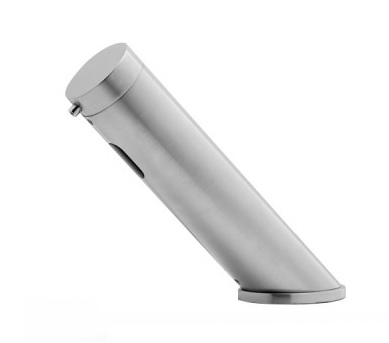
Fontana BS9801S Automatic Soap Dispenser
A high-capacity automatic foam dispenser designed for commercial handwashing stations where touch-free activation and reduced refill frequency are priorities.
What Architects & Facility Engineers Should Specify
Identify foam or liquid chemistry and manufacturer compatibility.
Size capacity against traffic and expected refill frequency.
Confirm activation zone and resistance to unintended dispensing.
Document hardwired, battery or hybrid electrical requirements.
Keep reservoirs, pumps and controls accessible below the counter.
Align dispenser reach, basin geometry and sensor faucet placement.
Related Commercial Handwashing Research
Fontana Automatic Soap Dispenser Series · Wall-Mounted Automatic Soap Systems · Integrated Faucet + Soap System
AEC FAQ
Why use automatic soap dispensing in commercial restrooms?
Hands-free activation reduces user contact with dispenser hardware and can provide more consistent dosing than manual pumps.
Is a larger reservoir always better?
Not necessarily. Capacity should balance restroom traffic, available below-counter space, refill strategy and maintenance access.
Should faucets and soap dispensers use separate sensors?
They commonly do. Their sensing zones should be coordinated so soap and water activate intentionally without interfering with each other.
What matters most for lifecycle maintenance?
Accessible reservoirs, replaceable pumps, sensor adjustment, soap compatibility and clear maintenance documentation are more important than appearance alone.
Where should soap dispensers be located for accessible use?
Placement should be coordinated with applicable ADA reach-range requirements, lavatory geometry and the accessible route to the handwashing station.